

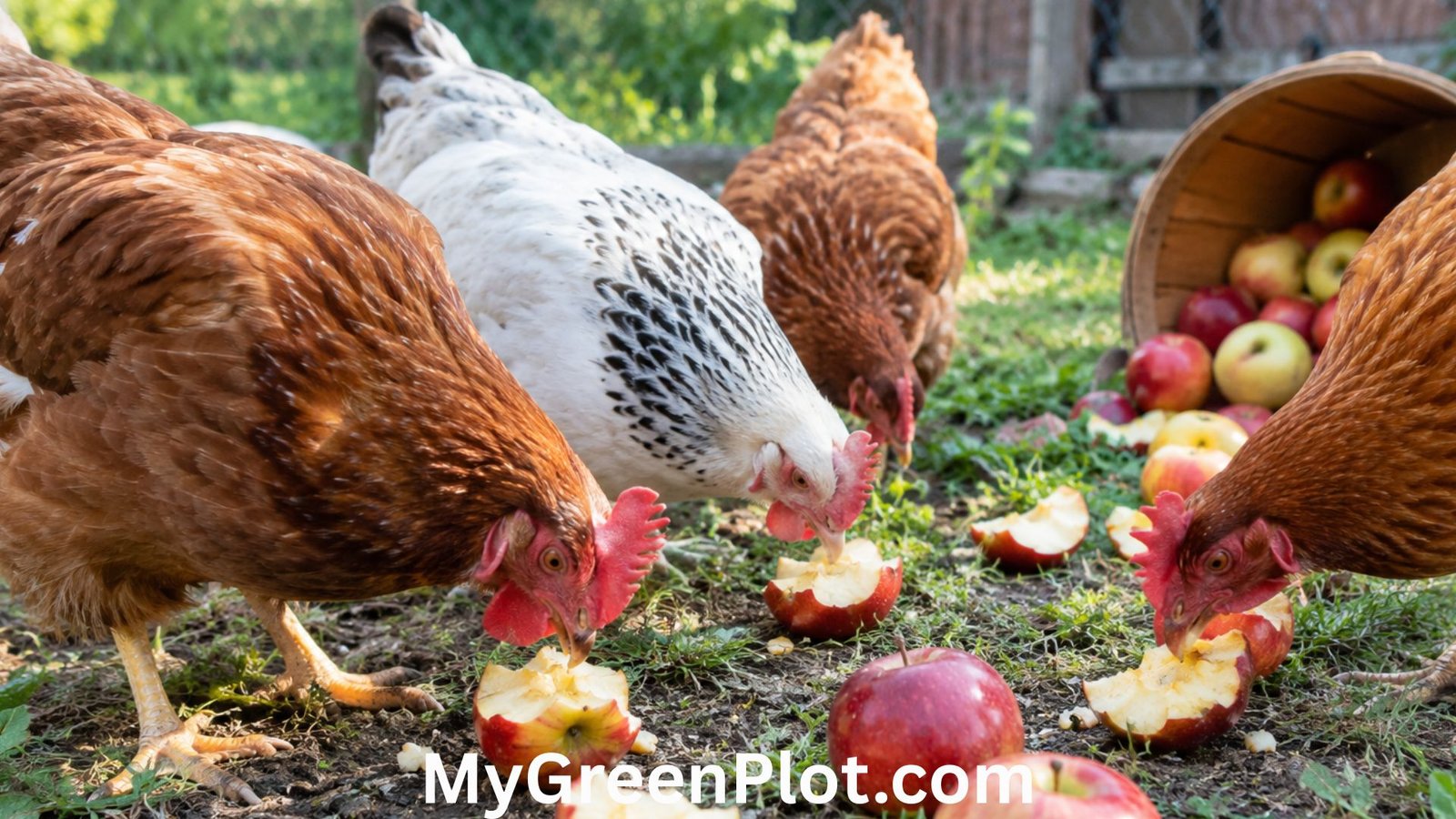
Yes, chickens can eat apples in moderation. Apples provide vitamins, fiber, and moisture that can be a healthy addition to a chicken’s diet. However, the way you prepare and serve apples matters. Chicken owners should remove the seeds, cut the fruit into small pieces, and offer it as an occasional treat rather than a replacement for balanced poultry feed.
Understanding the benefits, risks, and proper serving methods can help you give your flock apples safely.
Can Chickens Eat Apples Safely?
Chickens can safely eat fresh apples, including red, green, and yellow varieties. Most healthy adult chickens enjoy pecking at small apple pieces, and the fruit can add variety to their regular diet.
The most important thing is to serve apples in moderation. Chickens need a balanced poultry feed that provides the protein, energy, vitamins, and minerals required for healthy growth and egg production.
Before feeding apples to your flock, follow these basic guidelines:
- Choose fresh, ripe apples without mold or rotten areas.
- Wash the fruit to remove dirt and surface residues.
- Remove the seeds and core before serving.
- Cut the apple into small, manageable pieces.
- Offer small portions alongside the chickens’ normal feed.
Apples should be treated as a supplement to a balanced diet, not a daily staple. Too many treats can reduce the amount of nutritious feed chickens consume.
Nutritional Benefits of Apples for Chickens
Apples contain several nutrients that can contribute to a chicken’s overall diet. Although they are not a complete food for poultry, they offer some useful nutritional benefits.
Water: Fresh apples contain a high proportion of water, which can contribute to hydration, especially during warm weather. However, clean drinking water must always be available.
Fiber: Apples contain dietary fiber, including pectin. Small amounts can contribute to dietary variety, although chickens should obtain their primary nutrition from formulated poultry feed.
Vitamin C: Apples provide vitamin C, which plays a role in normal body functions. Chickens can also produce vitamin C themselves under normal conditions.
Natural carbohydrates: The fruit contains natural sugars that provide energy. However, excessive sugary treats are not suitable for a balanced poultry diet.
Apples also contain small amounts of other vitamins and minerals, but they do not supply all the nutrients chickens need. Their nutritional value is best enjoyed as part of an otherwise complete diet.
Can Chickens Eat Apple Seeds and Cores?
Chickens should not be deliberately fed apple seeds. Apple seeds contain amygdalin, a compound that can release cyanide when broken down. The risk depends on the amount consumed and whether the seeds are crushed or chewed.
An occasional accidentally swallowed seed is not automatically an emergency, but removing seeds is the safest practice.
The apple core also deserves attention. It is not necessarily poisonous, but it can contain seeds and may be harder for chickens to eat comfortably, particularly when served in large pieces.
For safer feeding:
- Cut the apple into quarters or smaller pieces.
- Remove the central core and all visible seeds.
- Avoid giving chickens whole apples with the seeds inside.
- Discard damaged portions that show mold or decay.
These simple preparation steps allow your flock to enjoy the flesh of the apple while reducing avoidable risks.
Can Chickens Eat Apple Skin?
Yes, chickens can eat apple skin. The skin contains fiber and plant compounds, and there is generally no need to peel a fresh apple before feeding it to healthy adult chickens.
However, washing the fruit thoroughly is important. Apple surfaces can carry dirt, pesticide residues, and other contaminants. If you are unsure how the fruit was treated, peeling it after washing can be an additional precaution.
You can serve apple skin attached to small pieces of flesh, making sure the pieces are easy to peck and swallow.
Avoid feeding chickens skins that are moldy, rotten, or contaminated. Apple scraps left out for long periods can spoil, particularly in hot or humid conditions.
Fresh, clean apple pieces are a better choice than old scraps collected from a compost pile.
How to Prepare and Feed Apples to Chickens
Preparing apples properly makes them easier for chickens to eat and helps prevent waste.
Follow these steps when offering apples to your flock:
- Wash the apple: Rinse it thoroughly under clean running water.
- Remove the seeds and core: Cut around the central section and discard it.
- Chop the flesh: Make small pieces suitable for your chickens’ size.
- Serve a small portion: Scatter the pieces in a clean feeding area or place them in a suitable dish.
- Remove leftovers: Clear away uneaten fruit before it becomes spoiled or attracts pests.
Introduce apples gradually if your chickens have never eaten them before. Watch how they respond and remove any uneaten pieces.
For chicks, extra care is necessary because they are smaller and more vulnerable to unsuitable food sizes. Their age-appropriate starter feed should remain their primary source of nutrition, and treats should not interfere with normal feeding.
How Many Apples Can Chickens Eat?
The appropriate amount depends on the number of chickens, their size, and what else they eat. There is no single apple portion that is ideal for every flock.
As a general feeding principle, all treats combined should make up no more than about 10% of a chicken’s daily diet, with at least 90% coming from nutritionally complete poultry feed.
For example, a small flock can share a few chopped apple pieces rather than receiving several whole apples. Start with a small quantity and adjust according to the flock’s size and appetite.
Keep these points in mind:
- Offer apples occasionally rather than making them a major daily food.
- Do not replace layer feed with fruit for laying hens.
- Reduce treats if chickens begin leaving their regular feed uneaten.
- Provide fresh water throughout the day.
- Remove uneaten fruit promptly.
A balanced diet is especially important for laying hens because they require appropriate levels of protein, calcium, and other nutrients to maintain their health and produce eggs with strong shells.
What Are the Risks of Feeding Apples to Chickens?
Apples are generally safe when properly prepared, but a few problems can arise if chickens receive too much or eat spoiled fruit.
Excess sugar: Apples contain natural sugars. Large quantities can contribute to an unbalanced diet and reduce the consumption of complete poultry feed.
Choking risk: Large, hard pieces can be difficult for smaller chickens to manage. Chopping apples into manageable pieces helps reduce this risk.
Seed exposure: Apple seeds contain amygdalin, so remove them before serving the fruit.
Spoiled fruit: Moldy or rotten apples may contain harmful substances and should never be fed to chickens.
Nutritional imbalance: Chickens that fill up on fruit may consume less of the feed needed for healthy growth, egg production, and normal body function.
If a chicken develops unusual symptoms after eating questionable food, remove the food and contact a poultry veterinarian for advice. Difficulty breathing, severe weakness, or other serious symptoms require urgent veterinary attention.
Frequently Asked Questions About Chickens Eating Apples
1. Can chickens eat red and green apples?
Yes. Chickens can eat red and green apples, as well as other common varieties. The main considerations are freshness, preparation, and portion size rather than the color of the apple.
2. Can chickens eat apples every day?
Small amounts may not cause problems, but apples should not become a major daily food. It is better to offer a variety of occasional treats while keeping complete poultry feed as the foundation of the diet.
3. Can chickens eat cooked apples?
Yes, plain cooked apples can be offered after they have cooled completely. Avoid apples prepared with added sugar, syrup, excessive salt, or other unsuitable ingredients. Remove seeds and cores before cooking.
4. Can baby chicks eat apples?
Chicks can potentially eat tiny amounts of soft, finely chopped apple once they are eating their appropriate starter feed reliably. However, treats are unnecessary for young chicks and can dilute their essential nutrition. Starter feed and clean water should remain their priority.
5. Can chickens eat apple peels and leftover apple scraps?
Yes, clean apple peels and fresh apple flesh can be offered in small quantities. Remove seeds and cores, and avoid scraps that are moldy, rotten, or contaminated. Clear uneaten pieces from the coop or run promptly.
Conclusion
So, can chickens eat apples? Yes, apples are a suitable occasional treat for most healthy chickens when served correctly. They provide moisture, fiber, and natural carbohydrates while adding variety to the flock’s diet.
The safest approach is to wash the fruit, remove the seeds and core, cut the flesh into small pieces, and serve only a modest amount. Avoid spoiled apples and make sure treats never replace complete poultry feed.
With these simple precautions, you can share fresh apples with your chickens while keeping their nutrition and well-being on track.
Read More : can chickens have jalapenos
