

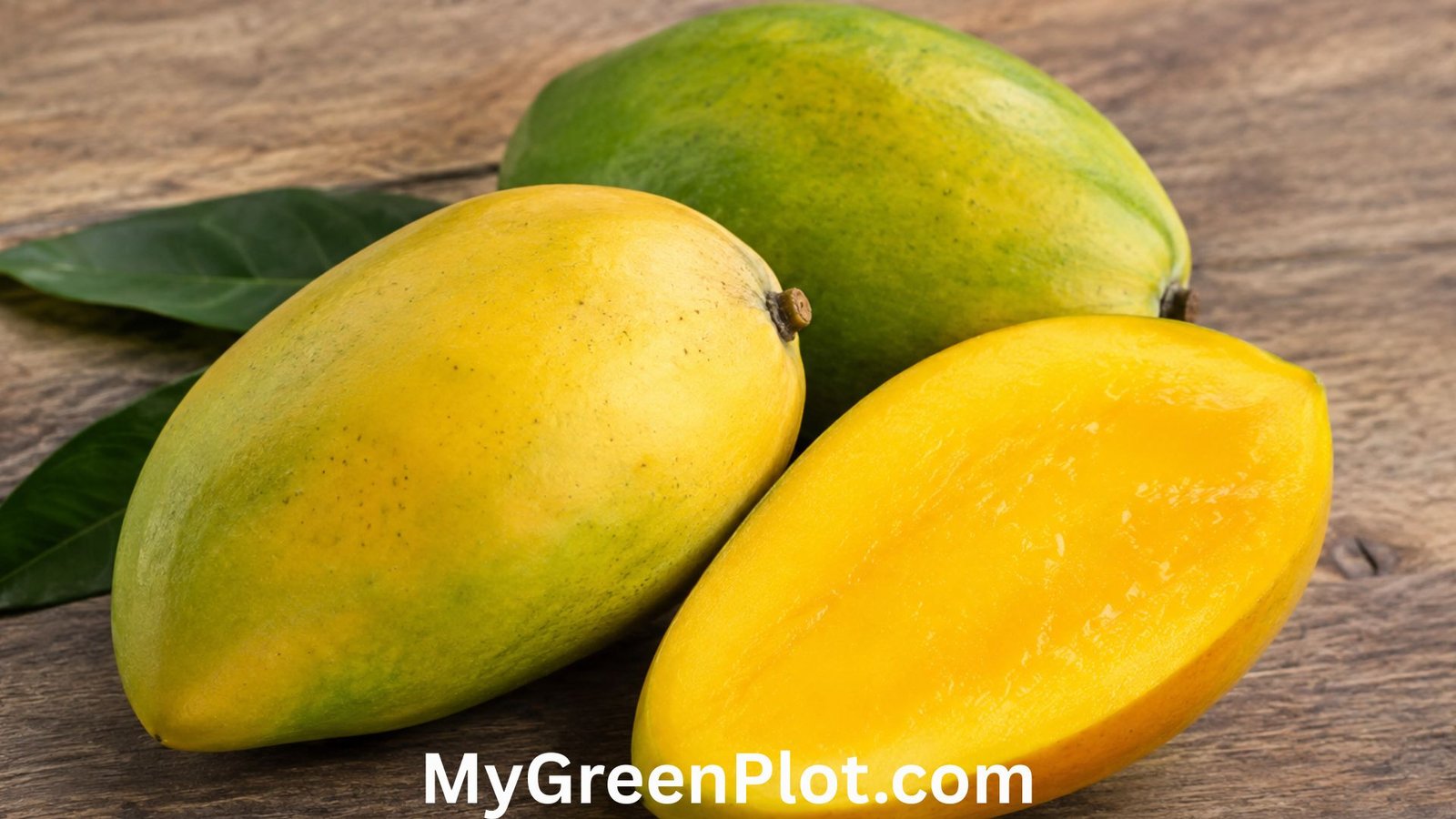
The Mingolo mango is a tropical fruit known for its pronounced sweetness, yellow flesh, and fruity aroma. Grown commercially in the Dominican Republic, it typically weighs around 275–550 grams, although individual fruits vary in size. Its skin changes from green to yellow as it ripens, making color, firmness, and aroma useful clues when choosing one.
Unlike some mangoes that develop a strong red blush, the Mingolo is usually recognized by its yellowing skin and flattened, elongated shape. Its flavor is often described as tropical, with peach-like notes that make it appealing for fresh eating.
What Is a Mingolo Mango?
A Mingolo mango is a cultivated mango variety associated with the Dominican Republic, where it is grown for local markets and international export. It has a distinctive appearance, with green skin during development, yellow skin at maturity, and flesh that ranges from yellow to orange-yellow.
The fruit is generally medium-sized, and published variety descriptions give a typical weight range of approximately 275–550 grams. Its shape is flattened and oblong rather than perfectly round, while the seed occupies the center of the juicy flesh.
Mingolo is also an established name in Dominican mango production. It is not simply a general label for every yellow mango, so checking the variety name with a fruit seller can help you avoid confusing it with other cultivars.
Are Mingolo Mangoes Sweet?
Yes, Mingolo mangoes are known for their very sweet flavor, particularly when they have ripened fully. Their natural sweetness is accompanied by a tropical aroma, with peach-like notes frequently mentioned in descriptions of the variety.
The taste can be richer and more fragrant than you might expect from the fruit’s relatively plain green or yellow exterior. A ripe Mingolo is suitable for eating on its own because its sweetness does not require added sugar.
However, the condition of the fruit matters. An immature mango can taste firmer and less sweet than a properly ripened one, so a disappointing first bite does not necessarily represent the flavor of the variety at its best.
What Does a Mingolo Mango Taste Like?
A ripe Mingolo mango has a sweet tropical flavor with fruity aromas that may remind you of peach and citrus. Its flesh is generally juicy and fairly smooth, although the amount and length of fiber can vary between fruit and growing conditions.
You can expect three main characteristics when tasting this variety:
- Sweetness: A strong, fruit-forward sweetness that makes it suitable for fresh snacks and desserts.
- Aroma: A tropical fragrance with peach-like notes and occasional citrus impressions.
- Texture: Juicy flesh with a relatively smooth mouthfeel, although some specimens contain noticeable fibers.
The aroma becomes easier to appreciate as the fruit ripens. If you cut a firm, immature mango, its flavor may seem less developed than that of a fruit that has softened slightly and developed a deeper yellow color.
How Can You Tell When a Mingolo Mango Is Ripe?
A Mingolo mango is generally ripe when its skin turns deep golden-yellow, its flesh yields slightly to gentle pressure, and it develops a noticeable fruity aroma near the stem. These signs are more useful together than color alone.
Use this simple check before cutting the fruit:
- Examine the skin. Look for a shift from green toward yellow or golden-yellow.
- Press it gently. The mango should yield a little without feeling mushy.
- Smell the stem end. A sweet, fruity fragrance can indicate that the flesh is developing its mature flavor.
- Inspect for damage. Avoid fruit with extensive bruising, leaking juice, or large sunken patches.
If your mango remains firm, leave it at room temperature and inspect it daily. Do not squeeze it repeatedly or press hard enough to bruise the flesh. Once it reaches the desired softness, refrigerate it if you are not planning to eat it immediately.
When Is Mingolo Mango Season?
Mingolo mangoes are commonly listed as being most available from March through July. This period reflects the variety’s typical commercial season, particularly in connection with production and exports from the Dominican Republic.
The exact harvest dates can change with weather, growing conditions, and the location of individual orchards. Fruit may also appear in overseas markets at different times because harvesting, packing, transport, and retail distribution take additional time.
If you are shopping outside the Dominican Republic, look for the fruit during the main spring and summer supply period. In countries where Mingolo mangoes are less common, availability may depend on specialist importers rather than ordinary grocery stores.
How Is Mingolo Mango Different From Other Mango Varieties?
Mingolo mangoes are distinguished by their yellowing skin, pronounced sweetness, and peach-like tropical aroma. Other varieties can share some of these characteristics, but differences in skin color, acidity, shape, and fiber content help separate them.
| Variety | Typical flavor | Appearance and texture |
|---|---|---|
| Mingolo | Very sweet with tropical and peach-like notes | Green skin ripens to yellow; juicy flesh |
| Tommy Atkins | More tart, with mild tropical and citrus notes | Often red and green skin; fibers throughout the flesh |
| Kent | Sweet, juicy, and tropical | Usually dark green skin with yellow flesh |
| Honey (Ataulfo) | Sweet with a balance of sweet and sour | Bright yellow skin and a relatively narrow shape |
These are general descriptions, not guarantees about every fruit. Growing conditions, maturity at harvest, and ripening after picking can all influence the flavor and texture you experience.
What Is the Best Way to Eat a Mingolo Mango?
Fresh Mingolo mango is an excellent choice when you want to enjoy the fruit’s natural sweetness without adding sugar. Its juicy flesh also works well in smoothies, chilled fruit bowls, and simple desserts.
For fresh eating, wash the mango, peel it if preferred, and slice the flesh away from the central seed. Cut it into cubes for a fruit salad or into larger pieces for a snack.
You can also blend the flesh with plain yogurt or milk to make a smoothie. If you prefer a dessert, combine mango pieces with unsweetened yogurt or freeze the flesh for a homemade frozen treat.
For salads, use a ripe mango that still holds its shape when cut. A softer fruit is better suited to blending because it breaks down easily and distributes its flavor throughout the mixture.
How Should You Store Mingolo Mangoes?
An unripe Mingolo mango should be kept at room temperature until it begins to soften and develop its ripe color and aroma. Refrigeration slows ripening, so chilling a very firm fruit may delay the development of the flavor you want.
Once the mango is ripe, place it in the refrigerator to slow further softening. For the best texture, handle the fruit carefully and avoid stacking heavy items on top of it.
After cutting, transfer the remaining flesh to a clean, covered container and refrigerate it promptly. Cut mango is best eaten within a few days; discard it if you notice mold, an unusual fermented smell, or a slimy surface.
Where Can You Buy Mingolo Mangoes?
Mingolo mangoes are most likely to be available through tropical-fruit importers, specialist produce shops, and selected supermarkets that stock Dominican mango varieties. Their reported March-to-July peak season is a useful starting point when checking availability.
Ask the seller whether the fruit is specifically Mingolo rather than assuming that every yellow mango belongs to this variety. If the country of origin is listed, Dominican Republic produce is consistent with the variety’s established commercial association.
In markets where Mingolo mangoes are uncommon, you may need to contact a specialist fruit retailer or look for imported seasonal stock. If you cannot find the exact variety, a Kent or Honey mango can offer a sweet, juicy alternative, although its aroma, texture, and overall flavor will not be identical.
Sources: National Mango Board | Eosta | COLEAD | FreshPlaza
Read More About Vegetables, Fruits,Herbs And Gardening Tip Click Below

1 Comment
Pingback: Types of Mangoes From Mexico: 6 Popular Varieties - mygreenplot.com