

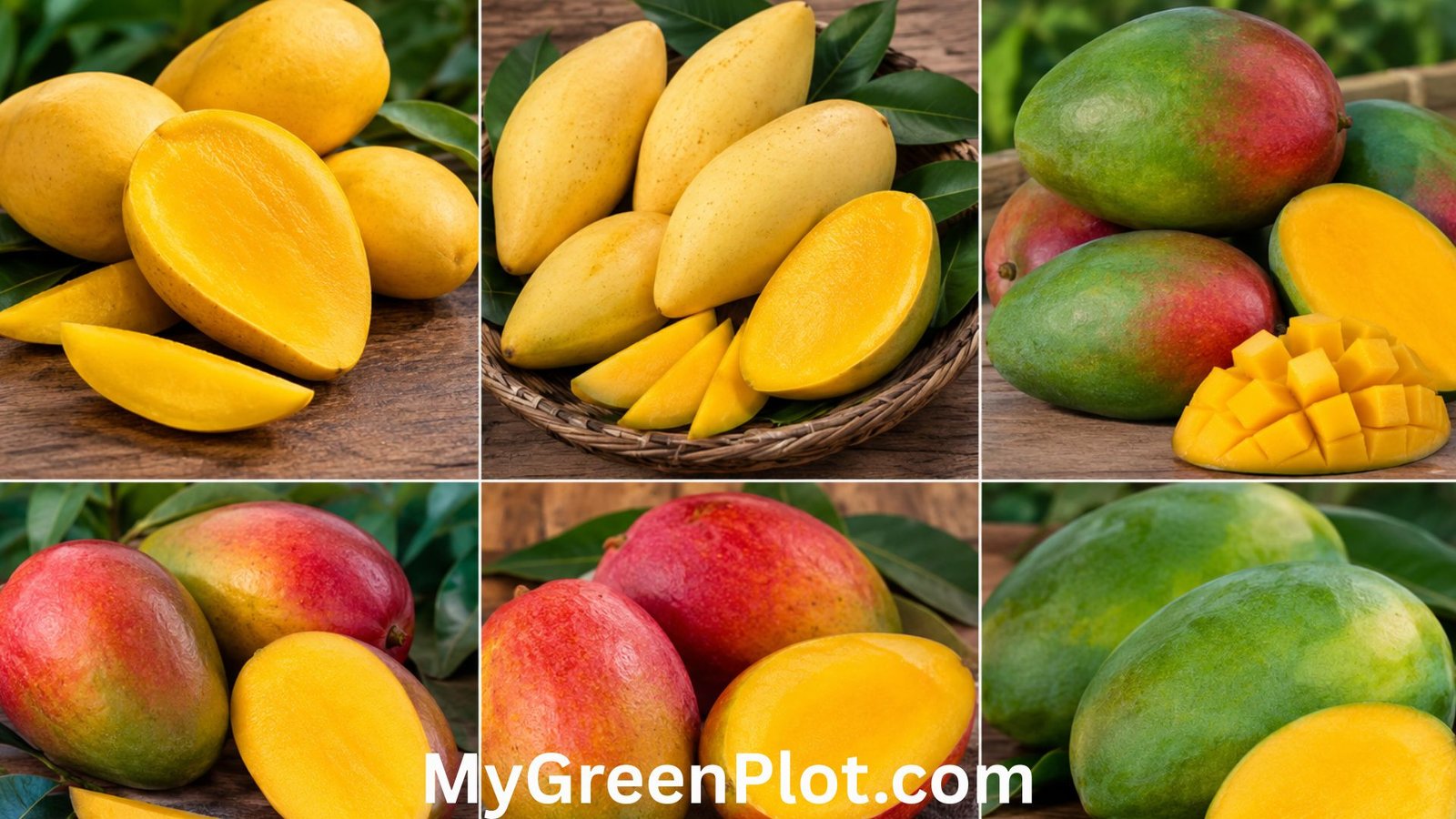
Mexico grows several popular mango varieties, including Ataulfo, Manila, Kent, Tommy Atkins, Haden, and Keitt. Each has a different combination of sweetness, flesh texture, shape, and skin color. The small, golden Ataulfo mango is known for its creamy flesh, while Tommy Atkins has firmer flesh and colorful red-green skin. Mexico’s warm growing regions, particularly Chiapas, Sinaloa, and Guerrero, support commercial mango production for domestic markets and export.
1. Ataulfo Mango: The Small, Creamy Mexican Favorite
The Ataulfo mango is a small, flattened oval fruit with golden-yellow skin and sweet, creamy flesh. It is closely associated with the Soconusco region of Chiapas, Mexico, and is one of the country’s best-known mango varieties.
Ataulfo mangoes usually have relatively little fiber, making them easy to eat with a spoon or blend into a smooth drink. Their flavor is predominantly sweet, with a slight tang that becomes more noticeable when the fruit is not fully ripe.
The Mexican government recognizes the Ataulfo mango’s regional identity through its designation of origin. The fruit received this designation in 2003, connecting the variety with its established growing region.
Best uses: Fresh snacks, smoothies, mango lassi, ice cream, and creamy desserts.
How to recognize it: Look for a relatively small, flattened mango that develops golden-yellow skin as it ripens. A ripe fruit gives slightly when pressed gently.
2. Manila Mango: A Sweet Variety With Delicate Flesh
Manila mangoes are generally small to medium-sized, elongated fruits with yellow skin and tender flesh. They are particularly valued in Mexico for their delicate texture, pleasant aroma, and use in traditional desserts.
Compared with firmer commercial varieties, Manila mangoes have a fine texture and relatively little fiber. Their flavor is sweet with a light tang, making them suitable for eating fresh without additional seasoning.
Manila mangoes are also used in Mexican kitchens for fruit drinks, jams, pastries, and other desserts. Their softer flesh can break down easily when cooked, which is useful when preparing fillings or purees.
Best uses: Fresh eating, mango puree, pastries, homemade jam, and desserts.
How to recognize it: Look for an elongated fruit with light-yellow skin and yellow flesh. As with other mangoes, check its softness and aroma rather than judging maturity by color alone.
3. Kent Mango: Sweet, Juicy, and Low in Fiber
The Kent mango is a medium-to-large fruit with green skin, sometimes showing a dark reddish blush, and sweet, juicy flesh. Although Kent is grown in Mexico, it is also cultivated in other mango-producing countries.
Kent mangoes are popular with people who prefer a substantial amount of edible flesh and relatively little fiber. Their rich sweetness and tender texture work well for eating fresh, preparing juice, or drying into fruit snacks.
A ripe Kent mango may develop yellow undertones or small yellow areas on its skin, but it can retain considerable green coloring. Gently pressing the fruit is more reliable than waiting for the entire skin to turn yellow.
Best uses: Fresh slices, smoothies, fruit salads, juice, and dried mango.
How to recognize it: Look for a large oval or oblong fruit with dark-green skin and occasional reddish coloring. The flesh is typically juicy and yellow-orange when ripe.
4. Tommy Atkins Mango: Colorful Skin and Firm Flesh
Tommy Atkins mangoes are medium-to-large, oval fruits recognized by their red blush, green areas, and yellow-orange coloring. They are widely grown in Mexico and other countries because their firm flesh and relatively good handling characteristics suit commercial distribution.
Their flavor is generally mild and sweet, sometimes with a slight tartness. Fine fibers are present throughout the flesh, so the eating texture can differ from the smoother Ataulfo or Kent varieties.
Tommy Atkins mangoes can remain visually green in places even when they are becoming ripe. Choose a fruit that yields slightly under gentle pressure and has a fresh, fruity aroma instead of relying entirely on its red coloring.
Best uses: Fruit salads, fresh slices, salsa, smoothies, and recipes that benefit from firmer mango pieces.
How to recognize it: Look for an oval mango with a prominent red blush mixed with green and orange-yellow tones. Its flesh is generally firmer and more fibrous than that of Ataulfo.
5. Haden Mango: Rich Flavor and Aromatic Flesh
The Haden mango is a medium-to-large oval fruit with red and yellow skin, often dotted with small pale speckles. Although the variety originated in Florida, it became established in Mexican mango production and remains an important commercial cultivar.
Haden mangoes have a rich, fragrant flavor and juicy flesh with noticeable fibers. Their aroma makes them suitable for fresh eating, but their juicy texture also works well in sauces, drinks, and preserves.
A Haden mango may show yellow coloring as it ripens, while its red blush remains visible. A gentle squeeze helps determine whether the fruit is softening enough to eat.
Best uses: Fresh eating, mango juice, chutneys, preserves, and fruit sauces.
How to recognize it: Look for red and yellow skin, an oval shape, and small pale dots. The flesh is aromatic and juicy, with more noticeable fibers than many low-fiber varieties.
6. Keitt Mango: The Large, Green-Skinned Variety
The Keitt mango is a large, oval fruit with dark-green skin that may retain its green appearance even when ripe. It is cultivated in Mexico and is often associated with later-season mango availability.
Keitt mangoes have sweet, fruity flesh that is juicy and relatively low in fiber. Their size makes them useful for households that want plenty of edible fruit from a single mango.
The most common mistake when choosing a Keitt mango is rejecting it because the skin is still green. Instead, gently press the fruit and look for a slight yield, along with a developed fruity aroma.
Best uses: Fresh slices, smoothies, salads, mango salsa, and frozen desserts.
How to recognize it: Look for a large, oval mango with predominantly dark-green skin. The flesh becomes juicy and sweet as the fruit ripens.
Read More : Mingolo Mango
Which Mexican Mango Varieties Are the Sweetest?
Ataulfo and Kent are both known for their pronounced sweetness, while Manila offers a delicate sweet flavor and Keitt provides a sweet, fruity taste. Actual sweetness varies with maturity, growing conditions, and how the fruit was handled after harvest.
Here is a quick comparison of the six varieties:
| Mango variety | Flavor | Flesh texture | Main identifying feature |
|---|---|---|---|
| Ataulfo | Very sweet, slightly tangy | Creamy, low fiber | Small, golden-yellow fruit |
| Manila | Sweet with a light tang | Tender, low fiber | Elongated yellow fruit |
| Kent | Sweet and rich | Juicy, relatively low fiber | Large, green-skinned fruit |
| Tommy Atkins | Mild and sweet | Firm, fibrous | Red, green, and yellow skin |
| Haden | Rich and aromatic | Juicy, fibrous | Red-yellow skin with pale dots |
| Keitt | Sweet and fruity | Juicy, low fiber | Large fruit that stays green |
These flavor descriptions are general characteristics rather than a guarantee that every mango of a particular variety will taste identical.
Where Are Mangoes Grown in Mexico?
Mexico’s commercial mango production is concentrated in warm regions, with Guerrero, Sinaloa, and Chiapas among the country’s important producing states. These regions provide tropical and subtropical conditions suitable for mango trees.
Chiapas is particularly associated with Ataulfo mangoes, while several other varieties are cultivated across different production areas. The precise variety grown at a particular orchard depends on local conditions, commercial demand, and the grower’s choice of cultivar.
The Mexican mango season generally extends from spring into summer, although the exact timing changes by region and variety. Ataulfo mangoes commonly appear in spring and early summer, while Keitt may remain available later in the season.
Imported fruit can reach supermarkets outside Mexico at different times depending on harvest schedules, shipping, and storage. If you are looking for a specific variety, check the label or ask the produce seller about its origin.
How to Choose a Ripe Mexican Mango
A ripe mango generally gives slightly under gentle pressure and develops a pleasant fruity aroma near the stem. Skin color helps identify the variety, but it cannot reliably determine ripeness for every type.
Use these practical checks when buying mangoes:
- Ataulfo: Look for golden-yellow skin and a slight yield when pressed.
- Manila: Choose a fruit that feels gently soft without bruised areas.
- Kent: Check for slight softness and yellow undertones; the skin may remain green.
- Tommy Atkins: Judge firmness and aroma instead of relying on its red blush.
- Haden: Look for a slight yield and a developed fruity fragrance.
- Keitt: Do not reject a fruit simply because its skin remains green.
Avoid mangoes with extensive bruising, leaking juice, or soft, sunken patches. If the fruit is firm and not yet ripe, leave it at room temperature and check it daily. Once ripe, refrigerate it to slow further softening.
Which Mexican Mango Is Best for Eating or Cooking?
The best variety depends on the texture you want and how you plan to use the fruit. Ataulfo is a good option for creamy smoothies, Kent works well when you want juicy slices, and Tommy Atkins is useful when firmer pieces need to hold their shape.
For a fruit salad, choose a ripe but still-firm mango, such as Tommy Atkins or Kent. If you are preparing a smooth puree or a creamy dessert, Ataulfo is a practical choice because its flesh generally contains little fiber.
Manila suits delicate desserts and homemade preserves, while Haden provides an aromatic option for juices and sauces. Keitt is useful when you need a larger quantity of juicy flesh for salsa, smoothies, or frozen treats.
You do not need to memorize every variety to choose a good mango. Match the fruit’s texture to the recipe, check its ripeness, and remember that the skin may stay green even when the flesh is ready to eat.
