

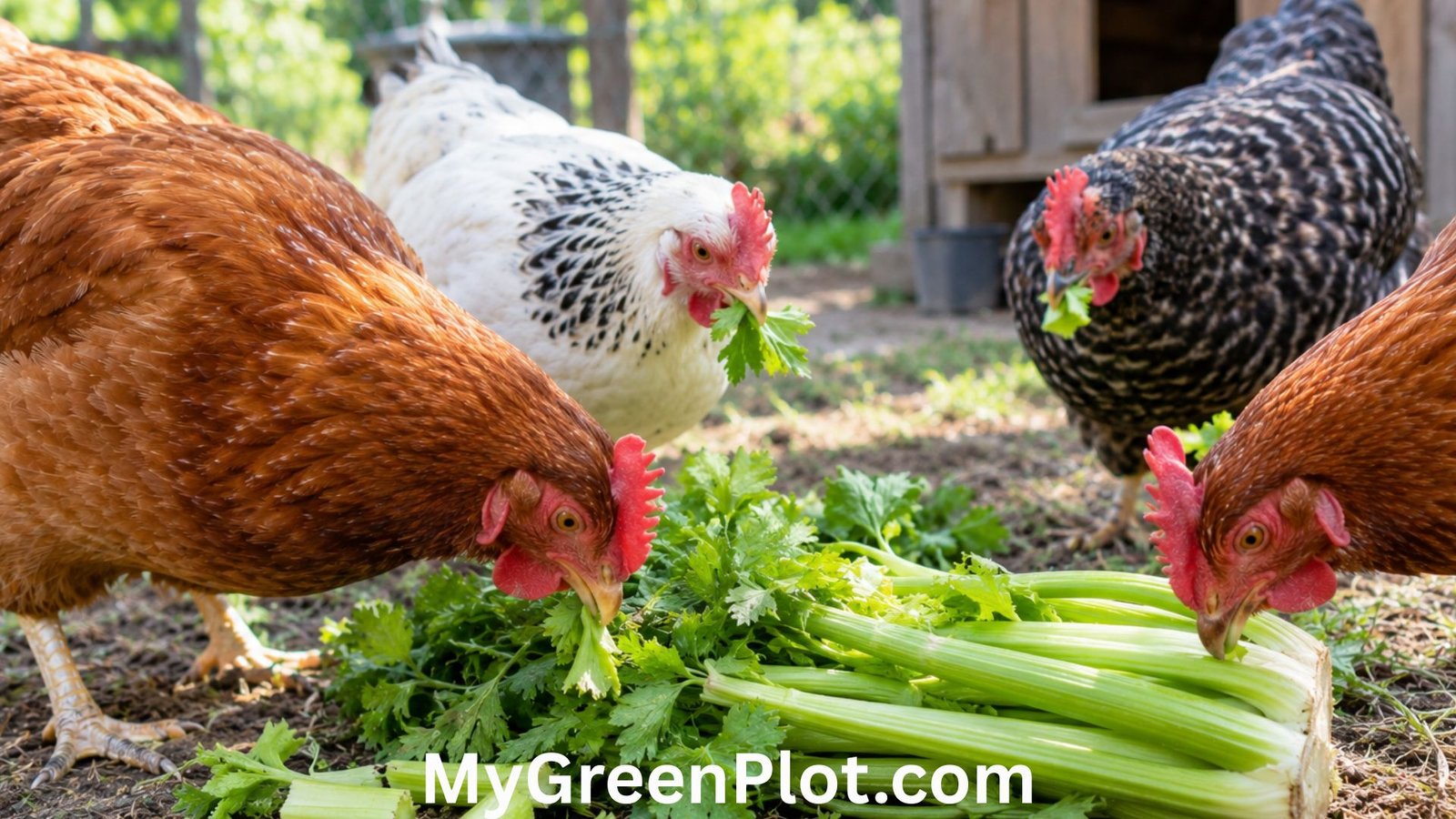
Yes, chickens can eat celery in moderation. Celery is a low-calorie vegetable that contains water, fiber, and several vitamins and minerals. It can add variety to a chicken’s diet when prepared properly and served in small amounts.
However, celery has tough, stringy fibers that can be difficult for chickens to swallow if the stalks are not chopped into small pieces. Chicken owners should also remember that celery is a treat, not a replacement for balanced poultry feed.
Can Chickens Eat Celery Safely?
Chickens can safely eat fresh celery, including the stalks and leaves, when it is clean and properly prepared. Many chickens enjoy pecking at small pieces of vegetables, making celery a convenient occasional treat.
Before serving celery to your flock, wash it thoroughly to remove dirt and potential surface residues. Remove any rotten or damaged sections, and cut the stalks into short, thin pieces to reduce the risk of choking.
Keep these safety tips in mind:
- Offer fresh, clean celery without mold or decay.
- Chop stalks into small pieces to make them easier to eat.
- Serve celery in moderate quantities.
- Avoid celery prepared with salt, butter, sauces, or seasonings.
- Keep fresh drinking water and complete poultry feed available.
Celery should complement a chicken’s normal diet rather than replace it. A nutritionally complete feed provides the protein, energy, calcium, and other essential nutrients chickens need for good health and egg production.
Read More : can chickens have jalapenos
What Are the Nutritional Benefits of Celery for Chickens?
Celery contains several nutrients that can contribute to dietary variety. Although it is not a complete food for poultry, small portions can provide moisture and some useful vitamins and minerals.
Water: Celery has a high water content, which contributes to hydration. However, it should never replace access to clean drinking water.
Fiber: Celery contains dietary fiber that contributes to its structure. Because its fibers can be stringy, chopping the stalks finely is especially important.
Vitamin K: Celery provides vitamin K, which plays a role in normal blood clotting and other bodily functions.
Vitamin C: This vegetable contains some vitamin C, which supports normal physiological processes. Healthy chickens can also produce vitamin C themselves under normal conditions.
Minerals: Celery contains small amounts of minerals, including potassium, which helps support normal muscle and nerve function.
These nutrients make celery a reasonable occasional addition to a varied diet. Nevertheless, its overall nutritional contribution is limited, so chickens should continue receiving most of their nutrition from balanced poultry feed.
Can Chickens Eat Celery Stalks and Leaves?
Yes, chickens can eat both celery stalks and leaves. The main difference is their texture and how easily the birds can eat them.
Celery stalks are firm and fibrous. Long strips or large chunks may be difficult to swallow, so cut them into very small pieces before offering them to your flock.
Celery leaves are generally softer and can also be served in small quantities. Wash them thoroughly and remove any wilted, slimy, or moldy leaves before feeding.
Here is how to prepare each part:
- Stalks: Slice them lengthwise if needed, then chop them into short, thin pieces.
- Leaves: Tear or chop them into smaller portions.
- Tender inner stalks: These may be easier for chickens to peck and eat, but they should still be cut appropriately.
You do not need to feed celery stalks and leaves separately. Both can be mixed into a small serving of other suitable vegetables.
Read More : Can Chickens Eat Apples
How to Prepare Celery for Chickens
Proper preparation makes celery easier to eat and helps reduce avoidable feeding risks.
Follow these steps before offering celery to your flock:
- Wash the celery: Rinse the stalks and leaves under clean running water.
- Inspect the vegetable: Discard any moldy, rotten, or contaminated sections.
- Remove tough strings if necessary: Peeling away particularly fibrous outer strands can make the stalk easier to manage.
- Chop it finely: Cut the celery into short, thin pieces rather than leaving long strings or large chunks.
- Serve a small amount: Place the pieces in a clean feeding area or suitable dish.
- Remove leftovers: Clear away uneaten celery before it spoils or attracts pests.
Raw celery is generally suitable when prepared correctly. You can also offer plain, cooked celery that has cooled completely, although cooking is not necessary for most healthy adult chickens.
Never serve celery cooked with onions, excessive salt, rich sauces, or other ingredients that may be unsuitable for chickens.
How Much Celery Can Chickens Eat?
The amount of celery your chickens can eat depends on the size of the flock, the birds’ ages, and the rest of their diet. There is no single portion that is ideal for every chicken.
As a general guideline, treats collectively should make up no more than about 10% of a chicken’s overall diet, with at least 90% coming from nutritionally complete poultry feed.
Start by offering a few finely chopped pieces to your flock. Observe whether the chickens eat them comfortably, and avoid providing so much celery that they leave their regular feed untouched.
For healthy feeding habits:
- Offer celery occasionally rather than in large daily portions.
- Rotate it with other suitable treats to provide variety.
- Keep complete feed as the main source of nutrition.
- Give chicks age-appropriate starter feed as their priority.
- Remove uneaten vegetable scraps promptly.
Laying hens need a balanced diet with appropriate protein, calcium, and other nutrients. Too many low-nutrient treats can dilute that diet and interfere with their nutritional needs.
Read More : Can Chickens Eat Onions
Can Baby Chicks Eat Celery?
Baby chicks require extra care when introducing vegetables. Their digestive systems and feeding abilities are still developing, and their nutritional needs are different from those of adult chickens.
A complete chick starter feed should remain their primary food. Celery is not necessary for healthy growth, and large pieces or tough strings can create a choking hazard.
If you decide to offer a tiny taste to older chicks that are eating starter feed reliably, use very finely chopped, tender celery and supervise them while they eat. Do not offer long strings or hard chunks.
For very young chicks, it is best to prioritize their starter feed and avoid unnecessary treats.
Always provide clean drinking water, and ensure that treats do not reduce the amount of balanced feed the chicks consume.
What Are the Risks of Feeding Celery to Chickens?
Celery is generally safe in small quantities, but improper preparation or excessive feeding can cause problems.
Choking risk: Long, stringy stalk fibers and large chunks can be difficult to swallow. Finely chopping celery helps reduce this risk.
Digestive discomfort: A large quantity of celery or other unfamiliar treats may upset normal digestion. Introduce small portions and observe your flock.
Nutritional imbalance: Celery does not provide all the protein, energy, calcium, and other nutrients chickens need. Too many treats can reduce their consumption of complete feed.
Spoilage and contamination: Moldy or rotten celery should never be fed to chickens. Dirty vegetables may also introduce unwanted contaminants.
Seasonings and additives: Celery cooked with excessive salt, rich sauces, or unsuitable ingredients is not an appropriate treat.
If a chicken struggles to swallow, has difficulty breathing, or develops severe or persistent symptoms after eating, seek advice from a poultry veterinarian promptly.
Frequently Asked Questions About Chickens Eating Celery
1. Can chickens eat raw celery?
Yes, chickens can eat raw celery when it is washed thoroughly and chopped into small, manageable pieces. Remove tough strings when necessary, and serve only a modest amount.
2. Can chickens eat celery leaves?
Yes, celery leaves are suitable for chickens in moderation. Wash them carefully, remove damaged portions, and chop them if needed to make eating easier.
3. Can chickens eat celery every day?
Celery should be an occasional treat rather than a necessary daily food. If offered regularly in small amounts, make sure all treats together remain a minor part of the diet and do not replace balanced poultry feed.
4. Can chickens eat cooked celery?
Yes, plain cooked celery can be offered after it has cooled completely. Avoid celery prepared with excessive salt, sauces, or unsuitable seasonings. Chop it into small pieces before serving.
5. Can chickens eat celery scraps?
Chickens can eat fresh celery scraps, including suitable pieces of stalk and leaves. Avoid scraps that are moldy, rotten, dirty, or mixed with potentially harmful ingredients. Remove uneaten leftovers from the coop or run.
Conclusion
So, can chickens eat celery? Yes, celery can be a safe occasional treat for chickens when it is fresh, clean, and prepared properly. Both stalks and leaves can be offered, but tough fibers and large pieces should be avoided.
Wash the vegetable thoroughly, chop it into small pieces, and serve it in moderation. Most importantly, keep balanced poultry feed as the foundation of your flock’s diet.
With these simple precautions, you can introduce celery as a little extra variety while supporting your chickens’ overall health and well-being.
