

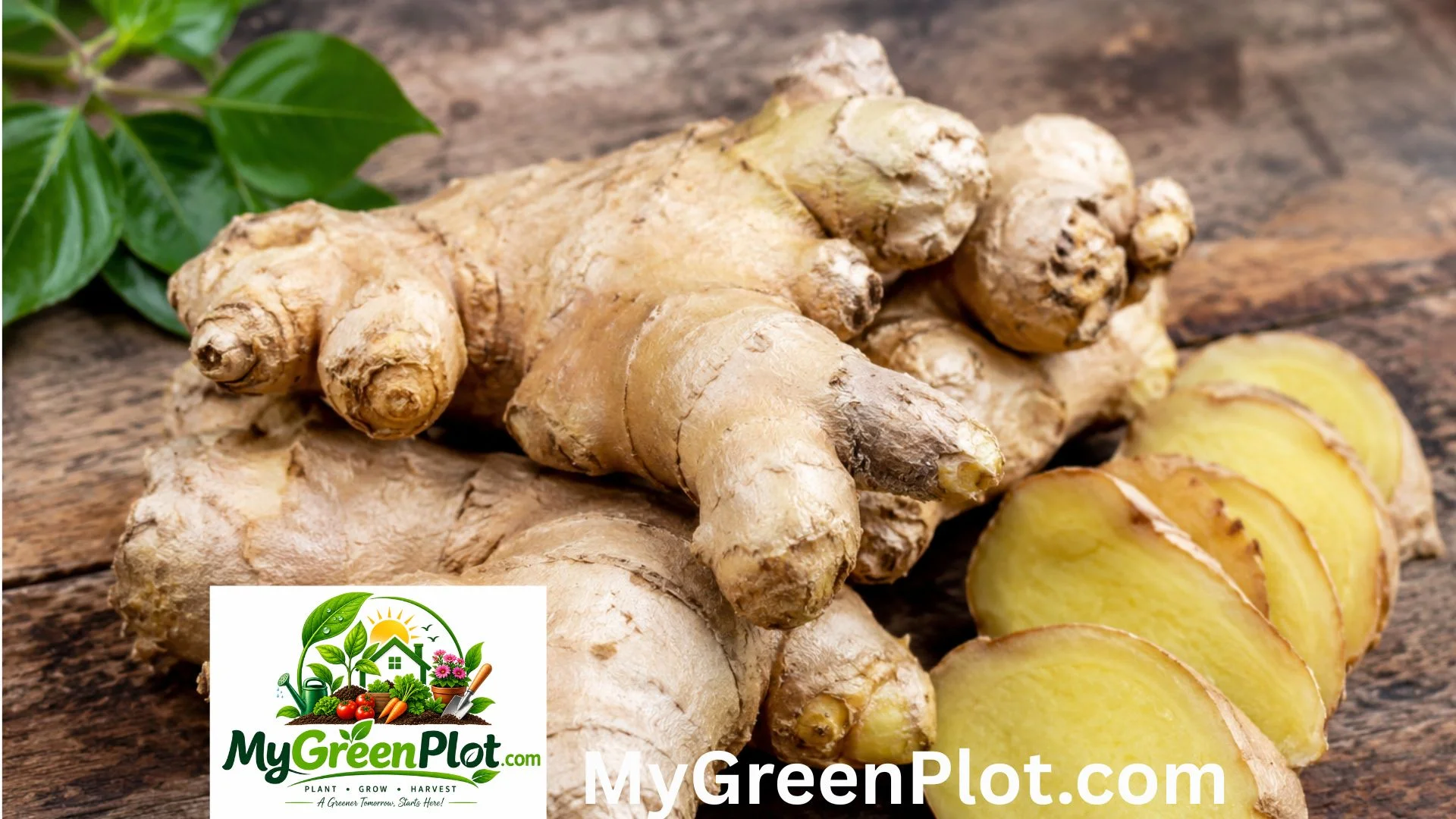
There is not clear evidence of a nationwide ginger shortage in the United States in September 2026, but the market is experiencing uneven quality, changing supply origins, and transportation problems. Current U.S. wholesale listings show ginger coming from China, Peru, Brazil, Costa Rica, Thailand, Ecuador, and other origins, with September 4 prices ranging from about $26 to $42 for many 30-pound cartons, depending on origin and market.
That distinction matters if you have walked into a grocery store and found ginger that is expensive, soft, unusually young, or simply harder to find.
The current market does not look like a situation where the United States has run out of ginger. Instead, different producing countries are moving through different crop and shipping conditions at the same time.
China has ginger available, but current market reports describe some Chinese ginger as relatively young and not drying as well as mature roots. Peru has expanded production substantially, while logistics remain a problem for moving ginger efficiently.
So the better question is not simply, “Is there a ginger shortage?”
It is: Which ginger, from where, and in what condition?
Is there really a ginger shortage in the United States in 2026?
The available September 2026 evidence points to a tight and uneven market rather than a nationwide shortage of fresh ginger.
USDA-derived terminal-market information dated September 4 shows multiple foreign origins supplying U.S. markets. At the time, Atlanta was receiving ginger from China and Costa Rica, Boston was receiving supplies from China, Peru, Brazil, and Thailand, and Chicago was receiving ginger from China, Peru, Brazil, Ecuador, and Thailand.
That variety of origins is significant.
A genuine nationwide supply collapse would normally produce much broader problems across the major wholesale markets. Instead, the current data show that ginger continues to enter the country from several producing regions.
The price spread also tells you something. In Chicago on September 4, Chinese ginger was listed at $28–$30 per 30-pound carton, while Brazilian ginger was $48–$50 and Ecuadorian ginger was $54.
Those differences are far too large to describe the entire market with one word such as “shortage.”
They indicate differences in origin, quality, availability, transportation, and buyer demand.
Why does the United States depend so heavily on imported ginger?
The United States depends overwhelmingly on imported ginger because domestic production is tiny compared with American consumption.
University of Illinois Extension reported in February 2026 that Americans consumed about 99,000 tons of ginger rhizome in the previous year, while U.S. production was only about 664 tons in 2024. That means domestic production represented roughly 0.7% of the amount Americans consumed.
That number explains why a ginger problem in another country can eventually affect an American grocery shelf.
Unlike tomatoes or potatoes, which have enormous U.S. production industries, ginger is primarily a tropical or subtropical crop. Major producing countries include China, India, Indonesia, Peru, Nepal, Nigeria, Sri Lanka, and Bangladesh.
Domestic growers do produce ginger, including specialty production in Hawaii and smaller operations elsewhere, but those farms cannot replace the imported supply chain on a national scale.
If international shipments slow down, U.S. buyers have little domestic production available to absorb the difference.
Which countries supply most of America’s ginger?
China, Peru, and Brazil are the three largest foreign sources in the U.S. ginger trade, with China supplying the largest volume.
World Bank WITS data show that the United States imported approximately 104.99 million kilograms of ginger in 2024, worth about $187.4 million. China supplied approximately 61.17 million kilograms, Peru supplied 23.54 million kilograms, and Brazil supplied 10.63 million kilograms.
That means China alone accounted for more than half of the reported 2024 import quantity.
Peru was the second-largest source by volume, while Brazil supplied another substantial share. India, Costa Rica, Thailand, and other countries made up the remainder.
The supply chain is therefore diversified, but not completely independent of individual countries.
When one major origin has poor quality, weather problems, shipping delays, or a difficult harvest, buyers can shift toward another origin—but replacement supplies may cost more or have different quality characteristics.
That is one reason ginger can remain available while becoming more expensive.
What is happening with Chinese ginger right now?
Chinese ginger is available in September 2026, but current produce-market reports say some of the crop is too young to dry well.
FreshPlaza reported on September 1 that conventional and organic ginger supplies were steady overall, but logistics were still creating challenges. The same report described a decent amount of Chinese ginger in the market while noting that some of it was young and not drying properly.
Maturity matters because ginger is not simply sold according to weight.
A mature rhizome has different storage and handling characteristics from young ginger. If the harvested root has not developed the characteristics buyers expect, it may need to move through the market faster rather than sitting in storage for an extended period.
The September report estimated that Chinese ginger would need another three to four weeks to reach better quality.
For a shopper, that problem may show up as ginger that looks acceptable from the outside but does not keep as long as expected.
It can also affect wholesale prices because buyers may discount immature product to move it before quality deteriorates.
Has Peru increased its ginger supply?
Peru has expanded its ginger production significantly, and current industry reporting says its 2026 crop was roughly twice the previous year’s volume.
Peru has become an important supplier of ginger to the United States, particularly for organic ginger. A September 1 market report said Peru had moved toward a nearly year-round ginger program and that industry estimates put its current production at about double the previous year’s amount.
That is the opposite of what you would expect during a simple global shortage.
More Peruvian production gives U.S. buyers another source when other origins have quality or availability problems.
But larger production does not eliminate every supply issue.
Ginger still has to be harvested, washed, packed, stored, transported, and delivered. Heavy rainfall or delays during harvesting can change the timing even when the final crop is large.
A larger crop can therefore coexist with short periods of tight availability.
Did weather affect Peru’s ginger supply?
Heavy rainfall in Peru delayed parts of the ginger harvest in 2026 and created quality and logistics risks even when overall availability remained comfortable.
An April 2026 market analysis reported that heavy rains in Peru during January and February had delayed harvesting and left older ginger in the ground longer than expected. That pushed the seasonal transition toward May and June and created concerns about aging product and logistics.
This is a useful distinction for understanding agricultural shortages.
Weather does not always destroy a crop.
Sometimes it changes when the crop becomes commercially available.
For ginger buyers, a delayed harvest can create a temporary gap between old inventory and new-crop material. If existing ginger is aging while the new harvest is not ready, buyers can become more selective and prices can react even though the total crop may eventually be large enough.
That kind of timing problem can feel like a shortage at the store level.
Why are ginger prices so different from one U.S. city to another?
Ginger prices vary by U.S. market because imported roots have different origins, qualities, package sizes, and transportation costs.
On September 4, 2026, USDA-derived wholesale listings showed Peru ginger at $40–$58 per 30-pound carton in Asheville, while Chicago listed Peru at $48 per carton. China was listed at $28–$30 in Chicago, and Brazil was $48–$50.
Miami showed another pattern: Peruvian ginger was listed at $32–$34 per 30-pound carton, Brazilian ginger at $28–$32, and Costa Rican ginger at $26–$28.
These are wholesale terminal-market prices, not supermarket prices, so you should not compare them directly with the price of a small package in a grocery store.
The numbers nevertheless demonstrate why there is no single “ginger price.”
A store close to a major distribution center can receive a different origin at a different transportation cost than a store several states away.
Organic certification can also change the price. On September 4, Peruvian organic ginger in the USDA-derived listings was around $32–$35 per 30-pound carton in several markets.
Is Brazil having a ginger shortage?
Brazil does not currently appear to be experiencing a nationwide ginger shortage, and its 2026 crop has been described as having good production and quality.
A July 2026 report from FreshPlaza said Brazil’s ginger season had started slowly but that growers were reporting good production and quality, with expected output around 80,000 tons, approximately matching the 2025 volume.
The problem in Brazil was different.
High temperatures in Europe temporarily reduced demand from Brazilian exporters, leaving abundant supply and low local prices during part of the season.
That matters to American consumers because Brazil exports ginger to both Europe and the United States.
When demand shifts between major markets, the amount of Brazilian ginger available to U.S. buyers can change even if Brazilian farms have not suffered a crop failure.
Trade is constantly reallocating the available product.
Read More : Arugula Shortage
Why does ginger sometimes look worse even when supply is available?
Ginger quality can deteriorate when roots are immature, aging, or exposed to difficult storage and transportation conditions.
The September 2026 market report about Chinese ginger provides a clear example: supplies were described as available, but some of the roots were too young and were not drying well.
That is different from having no ginger.
If your grocery store has ginger with wrinkled skin, soft spots, excessive moisture, mold, or a weak aroma, the problem may be the condition of that particular shipment rather than a shortage of ginger worldwide.
When I buy fresh ginger, I look for a root that feels firm and heavy for its size, has relatively tight skin, and does not have wet or sunken areas.
A slightly wrinkled piece can still be usable, but a soft section or visible mold is a reason to choose another piece.
Could ginger become more expensive later in 2026?
Ginger prices could move higher if import logistics deteriorate or if available supplies from major origins become temporarily harder to ship, even without a major global crop failure.
The September market is already dealing with logistics challenges. FreshPlaza reported that movement of both conventional and organic ginger remained difficult even though supply itself was described as steady.
Transportation matters unusually much for an import-dependent crop.
The United States needs to bring ginger thousands of miles from producing countries such as China, Peru, and Brazil. Every shipment has to move through ports, distribution networks, warehouses, and eventually retailers.
A delay at one stage can temporarily reduce the amount available at a particular terminal market.
That does not necessarily mean the farms produced less ginger.
It means the ginger has not reached the buyer when the buyer needs it.
What does the ginger shortage outlook look like for the rest of 2026?
The September 2026 outlook looks more like a shifting supply market than a prolonged nationwide ginger shortage.
China has available ginger, although some current material needs additional time to reach better maturity and drying quality. Peru has expanded production substantially and is supplying the U.S. market, while Brazil is reporting a crop around 80,000 tons.
The United States also continues to receive ginger from several other origins.
Current USDA-derived wholesale listings show that buyers can source ginger from China, Peru, Brazil, Costa Rica, Thailand, Ecuador, and other origins across different terminal markets.
That makes a prolonged nationwide shortage less likely than a series of smaller supply and quality swings.
If you are seeing expensive ginger at your local store right now, check the country of origin and the condition of the rhizome before assuming that a worldwide shortage is responsible.
The more accurate picture in September 2026 is a market with substantial imported supply, uneven quality, changing origins, and continuing logistical pressure—not an empty global ginger crop.
Sources: USDA Agricultural Marketing Service | USDA Economic Research Service | University of Illinois Extension | World Bank WITS | FreshPlaza
Read More : Blueberry Shortage
