

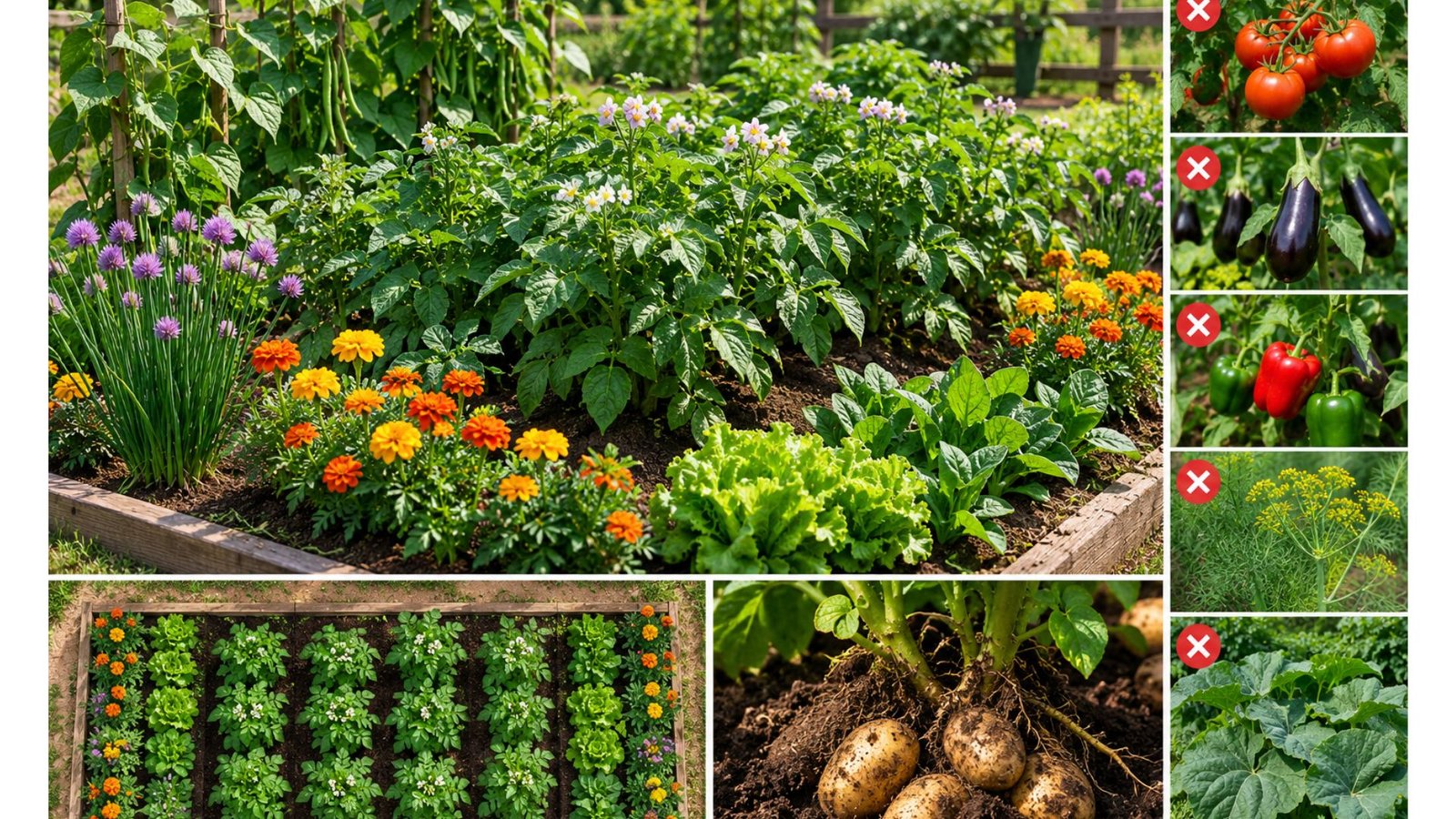
Potatoes are productive garden vegetables, but choosing what to grow around them can make a difference in how you organize your garden. The right neighbors can help you use available space, attract pollinators and beneficial insects, and maintain a more diverse growing area. However, not every plant is a suitable companion for potatoes.
The best companion plants for potatoes are those that have compatible growing requirements, do not compete excessively for nutrients and water, and can fit comfortably around developing potato plants. Beans, certain herbs, and selected flowers can be useful choices, while tomatoes and other plants in the same family require more careful consideration.
What Makes a Good Potato Companion Plant?
Potatoes grow best in loose, well-drained soil with consistent moisture and plenty of sunlight. Their roots and developing tubers need room, and their foliage can spread enough to shade nearby plants.
A suitable companion should fit into the garden without competing heavily with potato plants. Short-growing crops may work along the edges of a potato bed, while flowers can occupy borders where they will not shade the crop.
Companion planting is not a guaranteed way to increase potato yields or eliminate pests. Its benefits depend on the plants selected, garden conditions, and how the planting arrangement is managed.
Beans
Beans are a useful option to consider near potatoes because they can add diversity to a vegetable garden. Bush beans are generally easier to position than tall climbing beans, which may create shade if planted too close.
Beans belong to the legume family and can work with soil bacteria to fix atmospheric nitrogen. However, that nitrogen does not automatically become available to neighboring potato plants in large quantities while the beans are growing.
Plant bush beans where they will receive enough sunlight and will not interfere with potato hilling, watering, or harvesting. Avoid crowding both crops into a narrow bed.
Marigolds
Marigolds add bright flowers around the edges of a potato garden and can attract visiting insects. Some marigold species and cultivars have also been studied for their effects on particular soil pests, including certain plant-parasitic nematodes.
These effects are specific to the marigold type, pest species, and growing conditions. Simply planting a few marigolds beside potatoes will not reliably eliminate pests or prevent every soil problem.
Choose a sunny border and leave enough distance for potato foliage to spread. Compact varieties are often easier to fit into small vegetable gardens than tall, spreading types.
Chives and Other Alliums
Chives, onions, and garlic can fit into a diverse vegetable garden, especially along bed edges where their upright growth uses relatively little horizontal space.
Their strong scent is sometimes claimed to repel potato pests, but evidence that ordinary companion planting consistently protects potatoes is limited. Treat these plants as useful additions to the garden rather than a substitute for pest monitoring.
Keep alliums far enough from potato stems to allow good airflow and easy access. Choose a planting arrangement that does not interfere with hilling soil around the potato plants.
Lettuce and Spinach
Lettuce and spinach are compact, cool-season crops that may be useful around young potato plants. They can make productive use of open space before potato foliage becomes dense.
The timing is important. As potatoes grow, their leaves cast increasing shade, and the root zones of both crops may compete for water and nutrients.
Grow lettuce or spinach near the edge of the bed, where they can be harvested easily. Avoid planting them so closely that potato leaves cover the entire crop or make harvesting difficult.
Horseradish
Horseradish is traditionally mentioned as a companion plant for potatoes because it has been associated with improved pest resistance in gardening advice. However, reliable evidence that planting horseradish nearby consistently protects potatoes is limited.
It also requires careful placement. Horseradish is a vigorous perennial that can spread through pieces of its roots and become difficult to remove.
If you want to grow horseradish, consider a separate container or a dedicated area rather than placing it directly in a potato bed. This allows you to control its spread and harvest it without disturbing potato tubers.
Plants to Avoid Growing Near Potatoes
Some plants are less suitable neighbors because they share pests and diseases with potatoes, compete strongly for resources, or make garden management more difficult.
- Tomatoes: Both tomatoes and potatoes belong to the nightshade family and can be affected by similar diseases, including late blight.
- Eggplants: Eggplants share some pests and diseases with potatoes, so separating these crops can simplify disease management.
- Peppers: Peppers are also members of the nightshade family and may share certain pest or disease problems.
- Fennel: Fennel is often kept separate from vegetable beds because of its growth habits and potential effects on nearby plants.
- Large, sprawling crops: Plants that heavily shade potatoes or compete for water and nutrients may reduce the performance of both crops.
Avoiding these neighbors does not guarantee disease prevention. Crop rotation, healthy seed potatoes, good drainage, and appropriate spacing are more dependable parts of a potato disease-management plan.
How to Arrange Companion Plants in a Potato Garden
A good planting layout allows every crop to receive sufficient light and makes potato care straightforward. Start by placing potatoes in the main part of the bed, leaving room to mound soil around the stems as they grow.
Use the outer edges for compact herbs, small flowers, or quick-growing leafy vegetables. Plant taller crops where they will not shade potatoes during the sunniest part of the day.
For a small garden, try this arrangement:
- Main bed: Potatoes with adequate spacing for hilling and harvesting.
- Bed edges: Chives or compact marigolds.
- Open spaces early in the season: Lettuce or spinach that can be harvested before potato foliage becomes dense.
- Separate planting area: Tomatoes, peppers, eggplants, and vigorous perennials such as horseradish.
Water according to each crop’s needs, remove weeds while they are small, and check plants regularly for unusual leaf spots, yellowing, or insect damage.
Common Companion-Planting Mistakes
Companion planting works best when it supports sound gardening practices rather than replacing them.
Planting too closely: Crowded foliage reduces airflow and makes it harder to inspect plants. Follow the spacing recommendations for each crop.
Expecting flowers to control every pest: Flowers may attract beneficial insects, but they do not guarantee that harmful insects will disappear.
Ignoring crop rotation: Growing potatoes repeatedly in the same soil can increase the risk of certain pests and diseases. Rotate them with crops from unrelated plant families where practical.
Overlooking water competition: Plants growing close together share the same soil moisture. Monitor the bed during dry weather, especially when tubers are developing.
Allowing companions to interfere with hilling: Potatoes need soil mounded around the growing stems to protect developing tubers from light. Keep companion plants out of the areas where you need to add soil.
Frequently Asked Questions
1. What are the best companion plants for potatoes?
Bush beans, compact marigolds, chives, lettuce, and spinach are practical options to consider. Their usefulness depends on spacing, growing conditions, and the purpose of the planting arrangement.
2. Can I plant tomatoes next to potatoes?
It is better to separate them when possible. Tomatoes and potatoes belong to the same plant family and can share diseases, including late blight. Good crop rotation and sanitation help reduce risks.
3. Do marigolds keep potato bugs away?
Marigolds may attract beneficial insects, and certain types have specific effects on some soil pests. However, they do not reliably control all potato pests. Inspect potato plants regularly and use appropriate pest-management methods when needed.
4. Can beans grow beside potatoes?
Yes, bush beans can be considered for a mixed vegetable garden if there is enough room. Avoid excessive crowding, and remember that nitrogen fixed by beans is not automatically available to nearby potatoes during the same growing season.
5. What should I not plant near potatoes?
Tomatoes, eggplants, and peppers are often best separated from potatoes because they share some pests and diseases. Also avoid aggressive plants or large crops that compete heavily for space, sunlight, water, and nutrients.
Conclusion
Choosing suitable companion plants for potatoes can help you organize a productive and diverse home garden. Bush beans, compact marigolds, chives, lettuce, and spinach are reasonable options when their spacing and growing requirements fit your potato bed.
Just as important, avoid overcrowding and consider keeping tomatoes, peppers, and eggplants separate from potatoes to help manage shared disease risks. Good soil preparation, crop rotation, consistent moisture, and regular plant inspections remain essential for healthy potato growth.
Use companion planting as one part of a complete gardening plan, and choose plants that make your garden easier to maintain rather than simply adding more crops to the same space.
Sources: University of Minnesota Extension | Cornell Cooperative Extension | University of Wisconsin–Madison Extension | Royal Horticultural Society
Read More About : Gardening, Vegetables,Fruits And Flowers
