

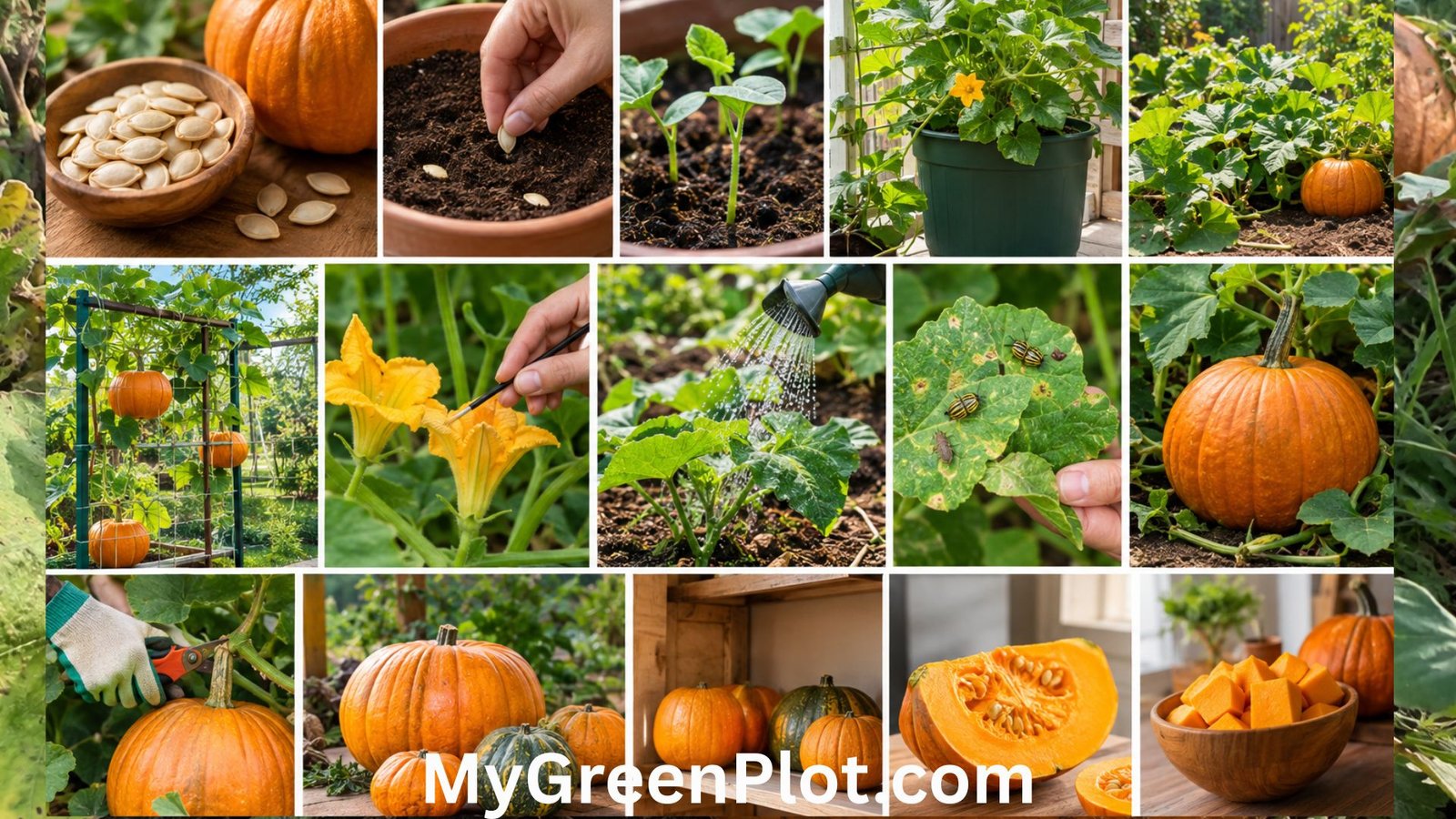
Growing pumpkins at home can be surprisingly rewarding, even if you do not have a large garden. With the right variety, enough sunlight, suitable soil, and consistent watering, you can grow healthy pumpkin vines in a backyard, raised bed, or large container. The biggest challenge is giving the plant enough room to spread and allowing its developing fruits to mature properly.
If you are learning how to grow pumpkin at home, start with a compact or bush-type variety if space is limited. Larger pumpkin varieties usually need more room, while smaller types are easier to manage in containers and small gardens.
This guide explains how to grow pumpkins from seeds, choose the right pot, care for the vines, solve common growing problems, and harvest pumpkins at the right time.
Choose the Right Pumpkin Variety
Before planting, decide what type of pumpkin you want to grow. Pumpkin varieties differ in fruit size, vine length, days to maturity, and suitability for containers.
- Small pumpkins: Suitable for beginners, container growing, and decorative displays.
- Bush-type pumpkins: Have a more compact growth habit than many traditional sprawling varieties, although they still need room.
- Pie pumpkins: Produce smaller fruits that are often preferred for cooking and baking.
- Large carving pumpkins: Usually need more space, a longer growing season, and consistent care.
For a small balcony or patio, look for a compact variety such as Jack Be Little or a suitable miniature cultivar. For a backyard, a small-fruited pie pumpkin may be a practical choice.
Check the seed packet for the expected mature vine size, fruit weight, and days to maturity. These details matter more than the pumpkin’s appearance when deciding whether it will fit your growing space.
Pick the Best Location and Planting Time
Pumpkins are warm-season plants. Their seeds germinate best in warm soil, and young seedlings are vulnerable to frost. Choose a planting location that receives at least six to eight hours of direct sunlight daily.
A sunny backyard bed is usually the easiest option because pumpkin vines can spread naturally. A patio can also work if you have a large container and enough sunlight.
Plant outdoors after the danger of frost has passed and the soil has warmed to approximately 21°C (70°F). In warmer climates, avoid planting during periods of extreme heat if possible. In regions with hot summers, early planting within the suitable warm-season window can help plants establish before the harshest weather arrives.
If you are gardening in a region with mild winters, use your local seasonal conditions rather than following a calendar designed for colder climates.
Prepare Healthy Soil for Pumpkin Plants
Pumpkins grow best in fertile, well-draining soil that retains enough moisture to support their large leaves and developing fruits. Heavy soil that remains waterlogged can damage roots, while very sandy soil may dry out too quickly.
Before planting, loosen the soil and mix in mature compost. Compost improves soil structure and adds organic matter, helping roots establish and access nutrients.
A soil pH of approximately 6.0 to 6.8 is generally suitable for pumpkins. A soil test can help you determine whether amendments are needed.
For garden beds:
- Remove weeds, stones, and large debris.
- Loosen the soil to encourage root growth.
- Incorporate well-rotted compost.
- Ensure excess water can drain away.
Avoid adding large amounts of fresh manure or fertilizer without considering the soil’s nutrient levels. Excess nitrogen can encourage vigorous leaf growth while delaying or reducing fruit production.
How to Grow Pumpkins From Seeds in Pots
Growing pumpkins from seeds in pots is possible, but the container must be large enough for the selected variety. A small decorative pot is not suitable for a plant that develops long vines and a substantial root system.
For a compact pumpkin, choose a sturdy container of at least 20–30 gallons (approximately 75–115 liters), preferably larger if the variety requires it. A container around 18–24 inches deep can provide useful root space, but follow the variety’s specific requirements. Make sure it has several drainage holes.
Use a high-quality potting mix designed for containers rather than dense garden soil. The mix should retain moisture without becoming soggy.
Follow these steps:
- Fill the container with moist potting mix, leaving a little space below the rim.
- Sow two seeds about 1 inch (2.5 cm) deep.
- Keep the mix evenly moist while the seeds germinate.
- Place the pot in a warm, sunny location.
- Once the seedlings develop true leaves, keep the stronger, healthier plant and remove the weaker one at soil level.
Avoid pulling out the unwanted seedling, as doing so may disturb the remaining plant’s roots.
Choose a bush or miniature variety whenever possible. Standard sprawling pumpkins may outgrow a container setup, even if the pot itself is large.
Can You Grow Pumpkins Indoors?
You can start pumpkin seeds indoors, but growing a productive pumpkin plant entirely indoors is much more difficult. Pumpkin vines need intense light, considerable root space, and room for flowers and fruits to develop.
A sunny windowsill may be sufficient for starting seedlings temporarily, but ordinary indoor light is rarely strong enough to support a vigorous, fruit-producing plant throughout its life.
If you want to grow pumpkins indoors:
- Start seeds in individual biodegradable or nursery pots.
- Provide a strong grow light when natural sunlight is insufficient.
- Keep seedlings warm and avoid waterlogged soil.
- Move the plants outdoors when weather conditions are suitable, hardening them off gradually.
- If keeping the plant indoors, provide a very large growing container, strong lighting, good airflow, and space for the vines.
Indoor flowering can also create a pollination challenge. If pollinating insects cannot reach the flowers, you may need to hand-pollinate them.
For most beginners, starting pumpkins indoors and growing them outside is more practical than keeping a full-size pumpkin plant inside a house.
Water and Feed Your Pumpkin Plants Correctly
Pumpkins have broad leaves and rapidly growing vines, so they need a steady supply of water. However, consistently saturated soil can cause root problems.
Water deeply when the upper layer of soil begins to dry. The exact frequency depends on temperature, rainfall, container size, and soil type. Pots generally dry out faster than garden beds, especially during hot weather.
Water near the base of the plant rather than repeatedly wetting the leaves. Morning watering is useful because it allows accidental splashes to dry during the day.
A layer of clean organic mulch can help conserve moisture and reduce weeds. Keep the mulch slightly away from the stem to reduce the risk of stem rot.
Feed the plant with a balanced fertilizer according to its label and the needs of your soil. Once flowering begins, avoid excessive nitrogen, which can promote leafy growth at the expense of fruit development. Do not assume that more fertilizer automatically produces larger pumpkins.
Watch the leaves for signs of stress. Persistent wilting in moist soil may indicate root trouble, while wilting in dry soil usually signals that the plant needs water.
Manage Pumpkin Vines in Small Spaces
Pumpkin plants are famous for spreading across the ground. Some vines extend several feet, so planning their direction before they become large makes maintenance easier.
If you have limited space, choose a compact variety first. Train the vines along an open path, around the edge of a garden bed, or through an area where they will not smother other plants.
Growing pumpkins vertically is possible with small-fruited varieties, but it requires a strong, secure trellis. The structure must support the weight of the mature plant and its fruits. Larger pumpkins can become too heavy for ordinary garden supports.
For supported fruits, use breathable slings made from strong fabric or mesh. Attach the slings securely to the trellis without constricting the growing stems.
Do not force stiff vines into sharp bends, and avoid moving them unnecessarily once fruits begin developing. If a vine naturally grows across the ground, that is perfectly acceptable.
Leave enough room for air to circulate around the leaves. Crowded, persistently damp foliage can make fungal diseases more likely.
Help Flowers Develop Into Pumpkins
Pumpkins produce separate male and female flowers on the same plant. Male flowers usually appear first. Female flowers have a small, immature fruit directly behind the petals, making them easy to identify.
Bees and other pollinators transfer pollen from male flowers to female flowers. If pollination is successful, the small fruit behind a female flower begins to enlarge. An inadequately pollinated fruit may yellow, shrivel, or stop growing.
To support pollination, avoid spraying insecticides on open flowers and encourage pollinator activity in the garden.
If pollinators are scarce, hand-pollination can help:
- Find a freshly opened male flower with pollen-covered anthers.
- Identify a freshly opened female flower with a small pumpkin-shaped swelling behind it.
- Gently transfer pollen from the male flower onto the stigma in the center of the female flower.
- Repeat with another male flower if needed.
Perform this in the morning when flowers are freshly open. Handle the flowers gently, and do not remove healthy leaves simply to expose the fruit.
Prevent Common Pumpkin Growing Problems
Even well-cared-for pumpkins can experience pests, diseases, or fruit-development problems. Inspect the leaves, stems, flowers, and young fruits regularly so you can respond before an issue becomes severe.
Powdery mildew: White, powder-like patches may appear on leaves. Improve airflow, avoid overcrowding, and water at the base. Remove badly affected material when appropriate, and use a labeled treatment if necessary.
Squash bugs and cucumber beetles: These pests can damage leaves, stems, and young plants. Check the undersides of leaves and inspect plants frequently. Remove pests by hand where practical, and use locally appropriate pest-management methods.
Yellowing leaves: Older leaves naturally change as plants mature, but widespread yellowing may indicate overwatering, poor drainage, nutrient problems, or disease. Check soil moisture and the overall condition of the plant before applying fertilizer.
Flowers dropping without fruit: Early male flowers commonly fall without producing pumpkins. If female flowers also fail to set fruit, poor pollination, heat stress, or other growing conditions may be responsible.
Rotting fruit: Fruit resting on wet soil can be more vulnerable to rot. Keep the growing area well-drained and place a dry, breathable barrier beneath developing pumpkins if needed.
Avoid treating every problem with the same pesticide or fertilizer. Identify the likely cause first, and always follow the product label when using a garden treatment.
Harvest and Store Homegrown Pumpkins
Pumpkins are generally ready to harvest when they have developed the expected mature color, the rind has become firm, and the stem begins to dry and harden. The exact timing varies by variety, so use the seed packet’s maturity estimate as a guide rather than a guarantee.
Before harvesting, check that the pumpkin is fully developed. A fruit that is still growing rapidly or has a soft rind may need more time.
Use a clean, sharp knife or pruning shears to cut the stem, leaving several inches attached if possible. Do not lift or carry a pumpkin by its stem because it may break away and damage the fruit.
Handle pumpkins gently to avoid bruises, cuts, and punctures. For varieties intended for storage, keep harvested fruit in a dry, well-ventilated place and follow variety-specific curing recommendations. Not every pumpkin variety stores equally well.
Store sound, mature pumpkins in a cool, dry location with good airflow, and check them regularly for soft spots or decay. Refrigerate cut pumpkin and use it promptly.
From sowing to harvest, many pumpkins take roughly 90–120 days, although some varieties mature sooner or later. Weather, variety, sunlight, and pollination all affect the final timing.
Frequently Asked Questions
1. How long does it take to grow pumpkins at home?
Many pumpkin varieties take approximately 90–120 days from planting to maturity. Smaller varieties may mature sooner, while large-fruited pumpkins can take longer. Check the seed packet for the expected maturity period.
2. Can I grow a pumpkin plant in a small pot?
A compact or miniature variety can grow in a large container, but an ordinary small flowerpot is usually inadequate. Choose a pot with generous root space and drainage, and confirm the variety’s container requirements before planting.
3. Can pumpkins grow indoors without sunlight?
Pumpkins need strong light to grow well and produce fruit. If natural sunlight is insufficient, a suitable grow light can help, but indoor growing also requires enough space, proper watering, and successful pollination.
4. How many pumpkins can one plant produce?
The number depends on the variety, growing conditions, and how much energy the plant can supply to its fruits. A healthy plant may produce several small pumpkins, while a large-fruited variety may produce fewer. Allowing too many fruits to develop can limit their size.
5. Why are my pumpkin flowers not producing fruit?
Male flowers often appear before female flowers, so a lack of fruit early in the season is not necessarily a problem. If female flowers open but the fruits fail to develop, insufficient pollination, extreme temperatures, or plant stress may be responsible. Encourage pollinators or try hand-pollination.
Conclusion
Learning how to grow pumpkin at home starts with selecting a suitable variety and providing the conditions it needs to thrive. Give the plant warm soil, plenty of sunlight, fertile and well-drained growing media, consistent moisture, and enough room for its vines.
If space is limited, try a miniature or bush-type pumpkin in a large container. If you have a backyard, allow the vines to spread naturally and monitor flowers for successful pollination. Regularly checking for pests and diseases will help you catch problems early.
With thoughtful preparation and routine care, even a beginner can grow pumpkins at home and enjoy harvesting the fruits of their own gardening efforts.
Sources: Utah State University Extension | University of Minnesota Extension | University of Illinois Extension | Illinois Extension — Pumpkin FAQs
Read More : Pumpkin Shortage
