

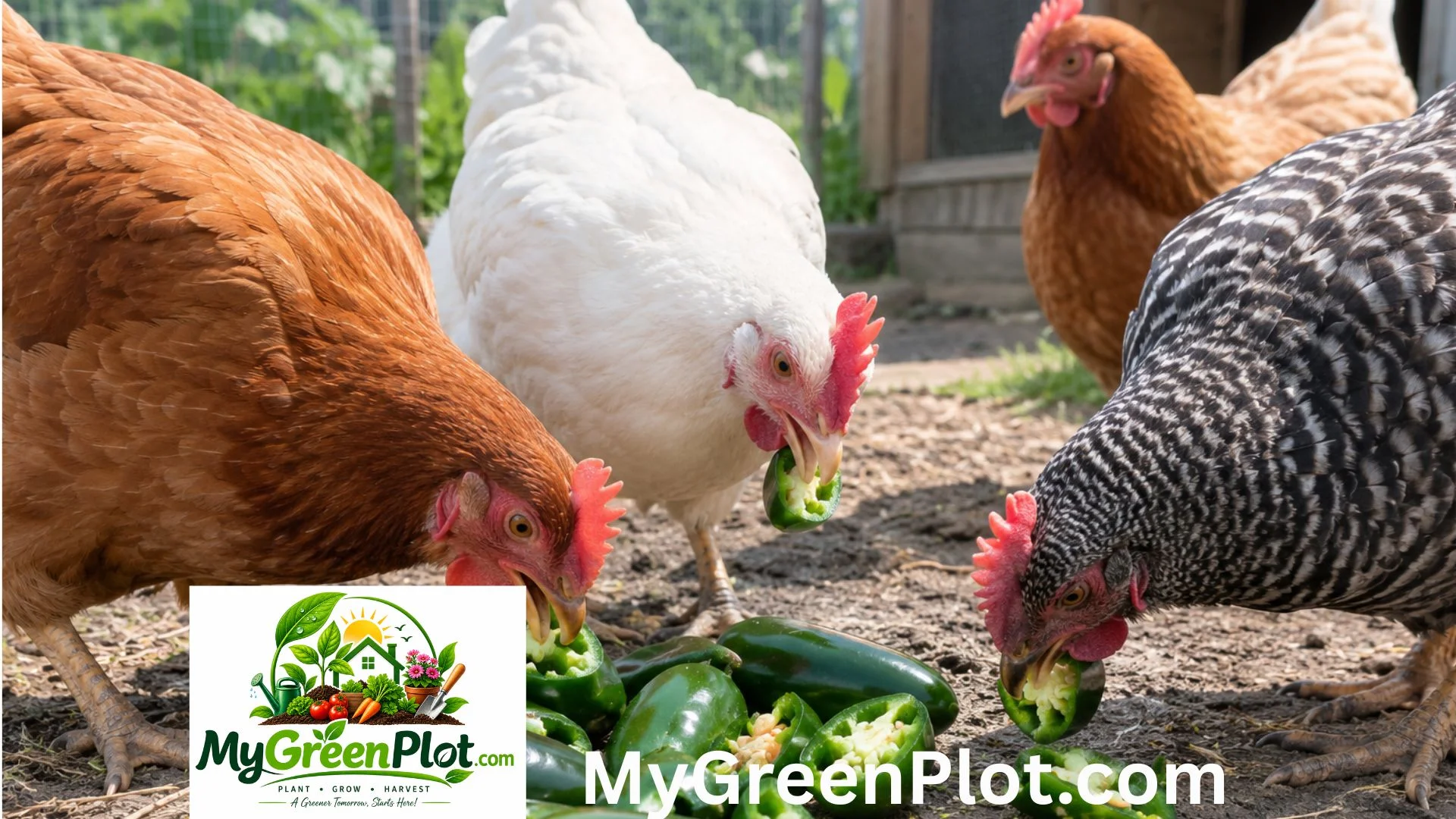
Yes, chickens can eat jalapeños, including the flesh, seeds, and white inner membrane. A fresh jalapeño typically measures around 2,500–8,000 Scoville Heat Units, but that human heat rating does not mean the same burning sensation for chickens. The safest approach is to offer jalapeños as an occasional vegetable treat rather than making them a regular part of the flock’s diet.
Jalapeños are not poisonous to chickens when offered as the fruit in reasonable amounts. However, there is a difference between feeding a few chopped peppers and allowing chickens to consume large quantities of scraps or an entire pepper plant.
Read More : Can Chickens Eat Coconut Flakes
Chickens Can Eat the Whole Jalapeño Fruit
The edible fruit of a jalapeño includes the green or red outer flesh, seeds, and pale ribs inside the pepper. These parts do not become dangerous simply because the pepper tastes hot to humans.
Jalapeños are the fruit of Capsicum annuum, the same species that includes many sweet peppers and other chili varieties. Their nutritional value comes mainly from water, fiber, vitamin C, and plant compounds rather than from any special benefit associated with their spicy flavor.
You can give chickens:
- Fresh green jalapeños
- Fully ripened red jalapeños
- Chopped jalapeño pieces
- Seeds and inner membranes
- Small amounts of leftover plain jalapeño from food preparation
Wash the pepper first if it has been exposed to pesticides, dirt, or garden chemicals. Remove spoiled, moldy, or fermented pieces before feeding.
A jalapeño that is fresh and clean is very different from a jalapeño covered in salt, oil, sauce, or processed seasoning.
Why Jalapeños Do Not Burn Chickens
Chickens do not experience capsaicin in the same way humans do because their sensory system does not respond to the compound through the same heat-sensitive pathway found in mammals.
Capsaicin is the chemical responsible for the burning sensation in chili peppers. In humans, it activates the TRPV1 receptor, which sends signals associated with heat and irritation. Birds, including chickens, have a different response to capsaicin and are largely insensitive to the spicy sensation that makes people reach for water or milk.
That is why a chicken can peck at a jalapeño while appearing completely unconcerned.
The important distinction is this: chickens not feeling the burn does not mean they need spicy food. The absence of a burning reaction only explains why the pepper is not automatically dangerous because of its heat.
A jalapeño is not made healthier for a chicken simply because it is hotter.
Are Jalapeño Seeds Safe for Chickens?
Yes, the seeds inside a jalapeño are generally safe for chickens to eat.
Jalapeño seeds do not contain a special poison that makes them unsuitable for poultry. Chickens routinely consume small seeds from many fruits, weeds, and vegetables. Their digestive system and gizzard are designed to process a wide range of plant material.
The white membrane and ribs are also edible. These inner portions often contain more capsaicin than the outer flesh, but that does not create the same burning problem it would for a person.
Still, there is no nutritional reason to force chickens to eat the seeds separately. If you are chopping a pepper, simply offer the pieces as they are.
The one thing to avoid is feeding seeds from peppers that are moldy, rotten, or contaminated with chemicals. Spoilage is the concern—not the spiciness.
How Much Jalapeño Should You Give Chickens?
Give jalapeño in small amounts, treating it like a vegetable snack rather than a feed replacement.
For a backyard flock, a few chopped pieces scattered among several chickens is a sensible starting point. For example, one fresh jalapeño divided among 4–6 adult chickens is a modest treat, especially when the birds also have access to their normal complete feed.
The exact amount depends on the size of the flock, the size of the peppers, and what other treats they receive that day. A chicken’s primary diet should still provide balanced protein, energy, calcium, vitamins, and minerals.
A useful practical rule is to keep treats—including peppers, fruit, vegetables, and table scraps—at roughly 10% or less of the birds’ overall daily food intake. This helps prevent treats from displacing nutritionally complete poultry feed.
Do not fill a feeder with jalapeños. Chickens may enthusiastically eat food that is novel or easy to peck, even when it does not provide everything they need.
The Best Way to Serve Jalapeños to Chickens
Chop jalapeños into manageable pieces and scatter them on clean ground or place them in a shallow feeding dish.
Cutting the pepper is not necessary because of the capsaicin. It is useful because smaller pieces are easier for multiple chickens to access, and it prevents one dominant bird from swallowing the entire pepper while others receive nothing.
A practical serving method is:
- Wash the jalapeño.
- Remove any rotten or damaged sections.
- Cut it into small strips or chunks.
- Scatter the pieces across the run.
- Remove leftovers if they begin to spoil.
Fresh peppers can be offered raw. There is no need to cook them first.
Avoid giving chickens jalapeños mixed with hot sauce, heavily salted food, fried coatings, garlic-heavy leftovers, or oily restaurant scraps. The plain pepper is the appropriate treat—not the entire spicy human meal.
Do Jalapeños Have Nutritional Benefits for Chickens?
Jalapeños provide some useful nutrients, but they should not be treated as a supplement or essential poultry food.
A fresh jalapeño contains water, small amounts of fiber, vitamin C, vitamin A-related carotenoids, and potassium. The actual contribution depends on how much the chicken eats, and a few pieces will not transform the bird’s nutrition.
The strongest reason to feed jalapeños is variety. A small amount of fresh produce can provide enrichment and encourage natural pecking behavior.
Research on peppers in poultry diets has investigated more concentrated and controlled conditions than the average backyard owner uses. A 2024 meta-analysis in Veterinary Integrative Sciences reviewed 19 studies involving pepper supplementation in laying hens. It found some changes in feed intake and egg-yolk color, but the results do not mean that tossing jalapeño scraps into a coop will reliably increase egg production.
That distinction matters. A controlled poultry diet containing a measured amount of pepper is not the same as feeding random kitchen leftovers.
Can Jalapeños Deworm Chickens?
No, jalapeños should not be relied on as a dewormer.
Hot peppers are frequently recommended in backyard poultry discussions as a natural way to eliminate worms, prevent parasites, or protect chickens from illness. However, eating jalapeños is not a proven replacement for proper parasite diagnosis and treatment.
Capsaicin has been studied in poultry nutrition and disease research, but laboratory or controlled-feed findings do not establish that a few fresh peppers will remove intestinal worms from backyard chickens.
If a chicken has weight loss, persistent diarrhea, pale combs, reduced appetite, weakness, or a swollen abdomen, the correct response is to investigate the cause. Parasites such as coccidia or intestinal worms require appropriate identification and treatment—not increasingly large quantities of chili peppers.
A pepper is a treat. It is not veterinary medicine.
Does Capsaicin Improve Egg Production?
There is some research into pepper-derived compounds in poultry diets, but the evidence is not strong enough to promise that jalapeños will make hens lay more eggs.
A meta-analysis of pepper supplementation found that pepper inclusion could affect certain production measurements, including egg-yolk color in some conditions. However, the results varied according to the pepper preparation, dosage, duration, and type of poultry diet.
That is very different from saying that a backyard hen will lay more eggs after eating one jalapeño.
Egg production is influenced much more strongly by:
- Age and breed
- Daylight duration
- Protein and energy intake
- Calcium availability
- Heat stress
- Illness and parasites
- Molting
- General flock management
If your hens are laying poorly, changing their complete feed and checking environmental conditions will matter far more than adding chili peppers.
Can Chickens Eat Jalapeño Plants, Leaves, and Stems?
The fruit is the part to offer. Do not intentionally feed pepper leaves, stems, or large amounts of the entire plant.
Jalapeño plants belong to the nightshade family, which also includes tomatoes, potatoes, and eggplants. Nightshade foliage deserves more caution than the mature fruit because plant leaves and stems can contain defensive compounds that are not present at the same levels in the edible fruit.
There is limited practical evidence establishing a specific toxic dose of jalapeño leaves for chickens, but that uncertainty is exactly why the foliage should not be treated as chicken feed.
If chickens are allowed into a vegetable garden, they may destroy pepper plants by scratching around the roots, breaking stems, and eating leaves. Use fencing to keep them away from growing pepper plants.
A few accidental pecks at a leaf are not the same as deliberately feeding a pile of pepper foliage. Avoid making the plant part of their diet.
Can Baby Chicks Eat Jalapeños?
Baby chicks should not be given jalapeños as a routine treat.
Young chicks need chick starter feed formulated for their rapid growth. Their nutritional requirements are more demanding than those of adult hens, and filling their small digestive systems with low-protein treats can interfere with balanced feeding.
A chick that is only a few days or weeks old has no nutritional need for jalapeño peppers. The pepper does not provide the protein, amino acids, minerals, and carefully balanced nutrients supplied by chick starter.
Wait until birds are older and established on their normal feed before offering small amounts of vegetables. Even then, jalapeños should remain an occasional addition.
Can Chickens Eat Cooked Jalapeños?
Plain cooked jalapeño may be acceptable, but raw fresh pepper is usually the better choice.
Cooking itself does not make jalapeños poisonous to chickens. The concern is what is added during cooking. Human dishes commonly contain salt, butter, oil, sugar, sauces, cheese, and other ingredients that are unsuitable in large quantities for poultry.
For example, a small piece of plain roasted jalapeño is not the same as a jalapeño popper covered in cheese and fried batter.
Avoid feeding:
- Jalapeños cooked with lots of salt
- Pickled jalapeños in salty brine
- Chili peppers mixed with processed sauces
- Fried jalapeño snacks
- Moldy cooked leftovers
- Peppers cooked with questionable food scraps
Fresh, plain, washed pepper is easier to evaluate and better suited to occasional feeding.
What Happens If Chickens Eat Too Many Jalapeños?
Eating too many jalapeños may cause digestive upset, loose droppings, or simply replace too much of the bird’s normal food.
The main issue is quantity. Chickens can eat many foods safely in small amounts but develop problems when they consume excessive amounts of one treat.
A large pile of peppers may also spoil quickly in warm weather. Moldy or decomposing food can create a much more serious risk than the original fresh vegetable.
If your flock gets into a large quantity of jalapeños, remove the remaining scraps and provide fresh water and normal feed. Observe the birds for changes in appetite, activity, droppings, or behavior.
If a chicken shows persistent diarrhea, weakness, breathing difficulty, severe lethargy, or stops eating, do not assume the pepper is the only cause. Contact a poultry veterinarian if symptoms are significant or continue.
Are Jalapeños Better Than Bell Peppers for Chickens?
Jalapeños are not necessarily better than bell peppers. Both can be offered as occasional vegetables, but bell peppers are usually the easier choice for owners who want a mild, simple treat.
Bell peppers contain no capsaicin-related heat at the levels associated with hot chili varieties, while jalapeños contain capsaicin and have a stronger flavor profile. Chickens do not experience the same heat sensation, so the distinction is more relevant to the human handler than to the bird.
Green, red, yellow, and orange bell peppers can all provide variety. Jalapeños are also acceptable, but there is no special reason to choose them over milder vegetables.
If you already have surplus jalapeños from your garden, they can be used. If you are buying vegetables specifically for your flock, you do not need to seek out hot peppers.
Final Feeding Advice
Jalapeños are safe for adult chickens as an occasional fresh fruit treat. The flesh, seeds, and inner membrane can be offered plain and chopped, while the leaves and stems should not be deliberately fed. Capsaicin does not produce the burning sensation in chickens that it produces in humans, but that does not make jalapeños a dewormer, medicine, or replacement for balanced poultry feed.
Use a few pieces, keep treats limited, and let the flock’s complete feed remain the foundation of its diet.
Sources: PubMed | Veterinary Integrative Sciences | PoultryDVM

1 Comment
Pingback: Can Chickens Eat Onions? Safety, Risks, and Better Feeding Choices - mygreenplot.com