

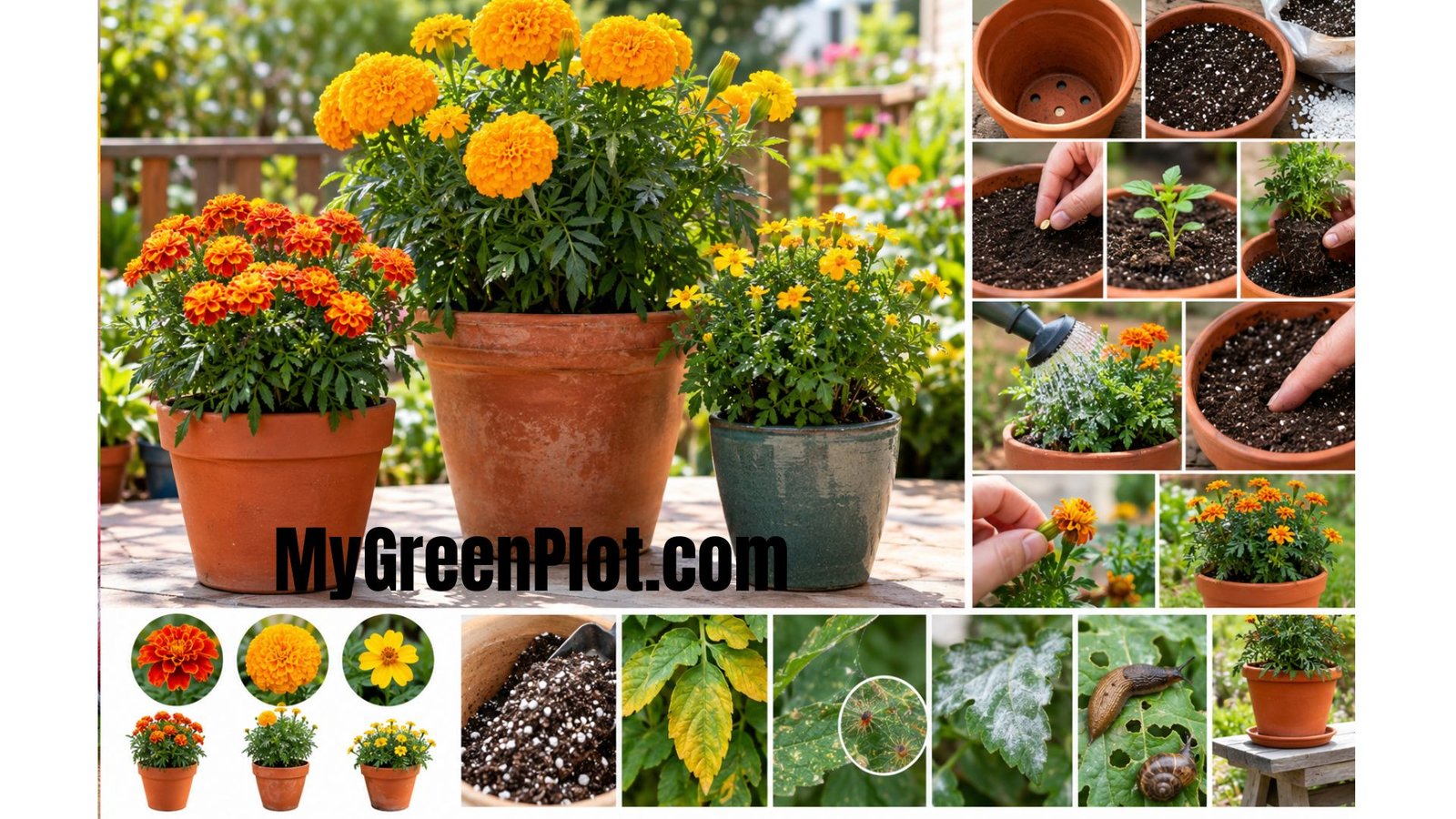
To grow marigolds in pots, plant them in a container with drainage holes, filled with light potting mix, in a spot that gets at least 6 hours of direct sun. Match the pot to the variety: 6 to 8 inch pots suit dwarf French marigolds, while tall African types need 12 inches or more. Sow seeds 1/4 inch deep, and expect flowers about 8 weeks later, with water only when the top inch of soil feels dry.
Which Marigold Type Fits Which Pot?
French marigolds (Tagetes patula) stay 6 to 12 inches tall and grow happily in a 6 to 8 inch pot, making them the easiest choice for small containers and window boxes. African marigolds (Tagetes erecta) are a different animal, reaching 2 to 3 feet with blooms up to 4 inches across, and they need a pot at least 12 inches wide and deep or they topple over and stall.
Signet marigolds (Tagetes tenuifolia) form tidy mounds 6 to 12 inches tall with small, lemon-scented, edible flowers. They suit the same 6 to 8 inch pots as French types and are the better pick if you want to garnish salads.
Pick by pot first, not by flower. A packet of ‘Crackerjack’ African marigolds crammed into a 6 inch pot will disappoint you; ‘Durango’ or ‘Bonanza’ French types in that same pot will perform. If you want height on a patio, put one African plant like ‘Inca’ in a 12 inch pot rather than three in a smaller one.
What Soil Should Marigolds Have in a Container?
Marigolds grow best in a loose, fast-draining potting mix with a pH between 6.0 and 7.0, and a standard bagged potting mix meets that without any amendment. Skip garden soil. It compacts in a pot, drains poorly, and holds water around the roots long enough to cause rot.
If your mix feels heavy, blend in about one part perlite to four parts potting mix to improve drainage. Every pot needs at least one drainage hole, and a saucer is fine as long as you tip out standing water after 15 to 20 minutes. I’ve lost more marigolds to a pot sitting in a full saucer than to any pest.
Also Read : Growing Vegetables,Fruits And Plants
How Do You Plant Marigold Seeds or Transplants?
Plant marigold seeds 1/4 inch deep, and they will sprout in 5 to 7 days when the soil sits at 70 to 75°F. Marigolds are frost-tender, so sow outdoors only after your last frost date, when nighttime temperatures stay above 50°F. To get a head start, begin seeds indoors 4 to 6 weeks before that date.
Space plants by size: one African marigold per 12 inch pot, three French or Signet plants in a 10 to 12 inch pot, or one plant per 6 inch pot. When seedlings have two sets of true leaves, thin to the strongest in each spot rather than letting them compete.
Transplants from a nursery go in at the same depth they sat in the cell. One exception: you can bury the stem slightly deeper, up to the first set of leaves, because marigolds root along buried stems and anchor better. Choose plants that haven’t opened flowers yet, since they settle in faster.
How Often Should You Water Potted Marigolds?
Water potted marigolds when the top inch of soil feels dry, which typically means every 2 to 3 days in mild weather and daily during heat waves above 90°F. Push a finger into the soil to check. Surface dryness alone doesn’t count; the top inch is the test.
Water at the base of the plant, not over the flowers. Wet petals and foliage invite botrytis (gray mold) and powdery mildew, especially in humid weather. Small clay pots dry out faster than plastic or glazed ceramic, so a clay-potted marigold may need water a full day sooner.
Wilting with wet soil means overwatering, not thirst. That one trips up a lot of people, because the droopy look says “water me” while the roots are actually suffocating.
Should You Fertilize Marigolds?
Marigolds need very little fertilizer, and too much nitrogen produces dense green foliage at the expense of flowers. If your potting mix contains slow-release fertilizer, skip feeding entirely for the first 6 weeks.
After that, a half-strength balanced liquid feed (such as 10-10-10) once every 3 to 4 weeks is plenty. If the plant looks healthy but isn’t flowering, a fertilizer with a higher middle number (phosphorus), like 5-10-5, can help. Stop feeding altogether if the plant is already blooming heavily.
How Do You Keep Marigolds Blooming All Summer?
Remove spent flowers by pinching the stem just below the faded bloom, down to the first set of leaves, every few days. This stops the plant from setting seed and pushes it to produce new buds, which can extend flowering from midsummer to the first fall frost.
Pinch the growing tip of young plants when they are 4 to 6 inches tall to force branching. An unpinched French marigold grows one or two flowers on a leggy stem; a pinched one becomes a rounded, bushy plant with many more blooms.
Why Are My Marigold Leaves Turning Yellow or Spotted?
Yellow lower leaves on a potted marigold almost always point to overwatering, so check drainage before you reach for fertilizer. Let the soil dry down to the 1 inch mark and make sure the drainage hole isn’t blocked.
Fine stippling on leaves with tiny webbing underneath signals spider mites, which thrive in hot, dry conditions. Rinse the plant with a strong stream of water every few days, or spray with insecticidal soap, coating the undersides of the leaves. A white powdery coating is powdery mildew; move the pot to a spot with better airflow and avoid wetting the foliage.
Slugs and snails chew ragged holes in young plants, mostly at night. Pots set on a raised surface or a bench keep them off.
Sources: University of Minnesota Extension | Clemson Cooperative Extension | Royal Horticultural Society | Missouri Botanical Garden

1 Comment
Pingback: Carnation vs Marigold: Differences, Growing Tips, and Uses - mygreenplot.com