

You can grow a pomegranate plant (Punica granatum) from seeds taken from a ripe fruit using a small pot, well-draining potting mix, and a warm, bright location. Plant cleaned seeds about ¼ inch (6 mm) deep and keep the soil lightly moist at around 70–85°F (21–29°C). Under suitable conditions, seedlings may emerge within a few weeks, although germination can take longer.
Growing pomegranate from seed is an inexpensive way to start a fruiting shrub at home, but there is one trade-off: a seedling may produce fruit that tastes different from the pomegranate you originally ate.
Which Pomegranate Seeds Should You Plant?
Fresh seeds from a ripe, healthy pomegranate are a practical starting point because pomegranate seeds can germinate without the extended cold treatment required by some other fruit trees.e a fruit with healthy, fully developed seeds rather than relying on its outer skin color alone. Pomegranate varieties can have red, pink, or pale-colored arils, so a lighter seed coating does not automatically mean the seed is immature.
For your first attempt, collect around 10 seeds. Planting several gives you a better chance of obtaining a healthy seedling if some seeds fail to germinate.
How to Clean Pomegranate Seeds Before Planting
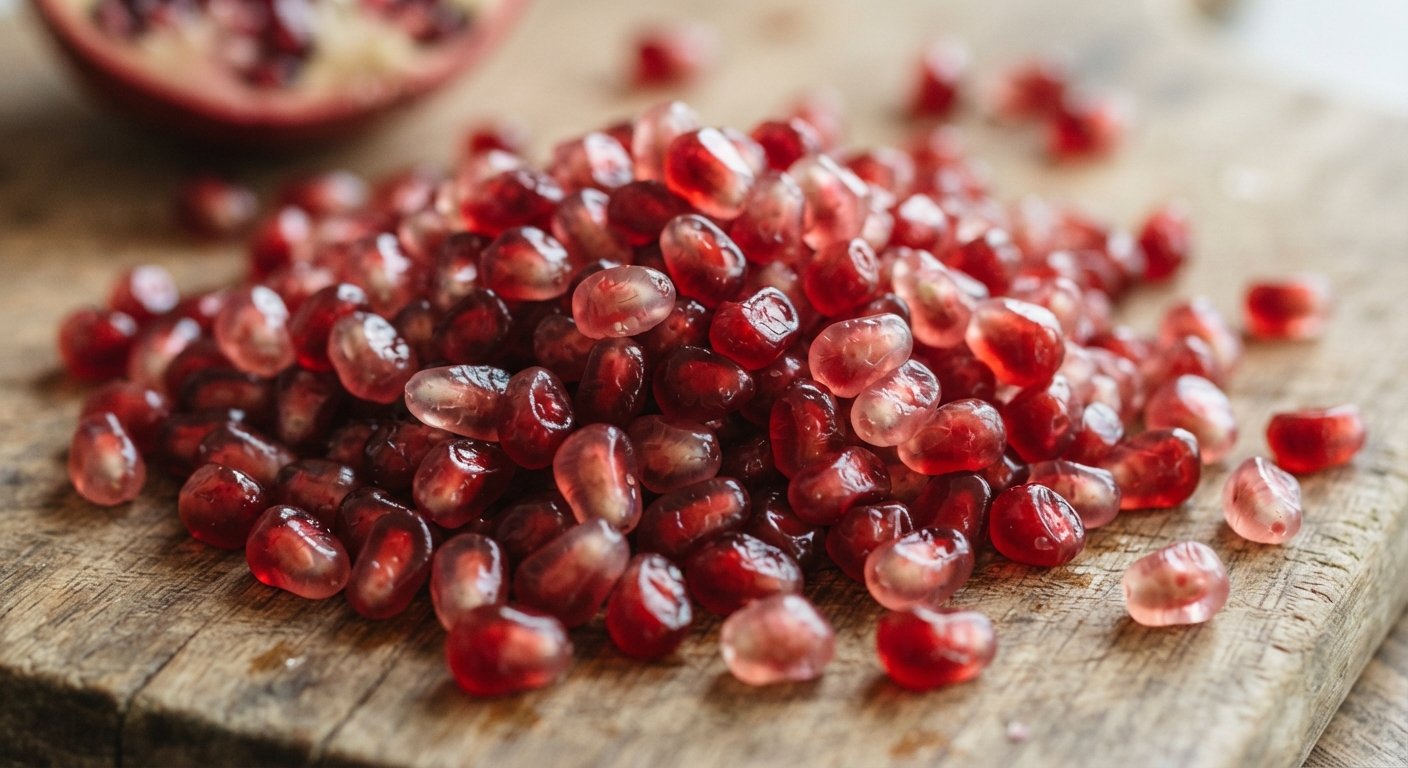
Remove the juicy red pulp surrounding each pomegranate seed because leftover fruit material can encourage mold in a warm, damp planting container. The fleshy coating is called an aril, and the actual seed lies inside it.
Follow these steps:
-
Cut open a ripe pomegranate and remove several healthy arils.
-
Gently squeeze each aril between your fingers or roll it inside a paper towel to separate the seed from the pulp.
-
Rinse the seeds thoroughly under clean water until the sticky juice and remaining pulp are gone.
-
Leave the cleaned seeds to air-dry for approximately 30 minutes to 2 hours before sowing, following the seed-preparation approach described by UF/IFAS.
Avoid crushing the seeds while removing the pulp. If you are unsure whether a seed is viable, plant several rather than depending on a single seed.
What Soil and Pot Work Best for Pomegranate Seeds?
Pomegranate seeds need a growing medium that holds enough moisture for germination but drains freely enough to prevent waterlogged roots. A clean seed-starting mix containing peat or coco coir and perlite is a suitable choice.
Choose a small pot or seed tray with drainage holes. A container around 3–4 inches (7.5–10 cm) deep is sufficient to begin with, provided the seedlings can later be transplanted into larger pots.
Avoid heavy garden soil that becomes compacted in containers. Excess water trapped around young pomegranate roots reduces the oxygen available to them and increases the risk of root rot.
Before planting, moisten the potting mix until it feels evenly damp, not muddy. This makes it easier to maintain consistent moisture without flooding the seeds.
How Deep Should You Plant Pomegranate Seeds?
Plant each cleaned pomegranate seed approximately ¼ inch (6 mm) below the surface of the potting mix. This shallow placement allows the emerging seedling to reach the surface without having to push through a thick layer of soil.
Make a small hole with your fingertip, place one seed inside, cover it lightly, and gently press the surface. If using a seed tray, leave about 1–2 inches (2.5–5 cm) between seeds to make early growth easier to manage.
Water the container gently after sowing. A spray bottle or fine watering rose works well because a strong stream can uncover the seeds or move them into one corner of the pot.
Label the container with the planting date. That simple step helps you judge germination progress instead of repeatedly disturbing the soil to check whether a seed has sprouted.
What Temperature Helps Pomegranate Seeds Germinate?
A warm environment around 70–85°F (21–29°C) is a useful target for germinating pomegranate seeds. Keep the container somewhere consistently warm rather than exposing it to chilly nights or direct, intense afternoon heat.
A bright indoor windowsill can work if the temperature remains stable. If your room is cool, a seedling heat mat with a thermostat can help maintain suitable warmth.
Covering the pot loosely with a clear plastic cover can slow moisture loss, but remove the cover once seedlings emerge or if heavy condensation and mold develop. The soil should remain lightly moist, never saturated.
Pomegranate seeds do not all sprout at the same speed. UF/IFAS reports that seed-grown pomegranates may germinate in approximately 45–60 days, so do not discard a pot simply because nothing appears during the first two weeks.
When Will Pomegranate Seedlings Appear?
Pomegranate seedlings may emerge within a few weeks under favorable conditions, although some take around 45–60 days. Temperature, seed maturity, moisture, and seed quality all influence how quickly germination occurs.
When a seedling appears, you will usually see a small stem pushing through the surface, followed by its first leaves. Let the seedling establish itself before moving it, because its earliest roots are delicate.
If nothing has emerged after six to eight weeks, inspect the conditions first. Check whether the soil has dried out, stayed waterlogged, or become too cold. You can carefully inspect one seed to assess its condition while leaving the others undisturbed.
Do not assume every seed has failed just because germination is uneven. Different seeds from the same pomegranate can emerge on different days.
How Much Sunlight and Water Do Young Pomegranate Plants Need?
Young pomegranate plants need bright light to develop sturdy stems, while their roots benefit from soil that drains between waterings. After emergence, move seedlings into a bright location and gradually introduce them to direct sunlight rather than suddenly placing tender leaves in intense midday sun.
Check the top ½ inch (about 1 cm) of potting mix with your finger. If it feels dry, water gently until excess water drains from the bottom; if it is still damp, wait before watering again.
Overwatering is a common problem in small pots because the limited soil volume can remain wet for too long. Empty any saucer beneath the container so the roots are not left sitting in standing water.
As the plant grows, pomegranate generally benefits from full sun. Choose a location that can provide approximately six or more hours of direct sunlight daily once the plant is established and acclimated.
When Should You Transplant a Pomegranate Seedling?
Move a pomegranate seedling into a larger pot when it has developed several true leaves and its roots have begun filling the original container. The first leaves that appear are the seed leaves; true leaves develop afterward and look more like the plant’s characteristic foliage.
A pot around 6–8 inches (15–20 cm) wide is a reasonable next step for a young plant, provided it has drainage holes. Use fresh, well-draining potting mix and handle the seedling by its leaves or root ball rather than squeezing its thin stem.
After transplanting, water the mix thoroughly and keep the plant in bright, indirect light for a short adjustment period before returning it gradually to stronger sunlight.
If you plan to grow your pomegranate outdoors, harden it off over roughly 7–10 days. Begin with a short period outside in a sheltered spot, then increase its exposure to sunlight and outdoor conditions each day.
Will a Pomegranate Grown From Seed Produce Fruit?
A seed-grown pomegranate can eventually flower and produce fruit, but its fruit may differ in size, sweetness, acidity, color, or seed texture from the original pomegranate. This variation occurs because seedlings are genetically different from the parent plant.ed-grown plants may begin flowering after a few years, but fruit production depends on the plant’s genetics, growing conditions, maturity, and climate. There is no guaranteed harvest date for a seedling.
If your goal is to grow a pomegranate plant for its foliage, flowers, or the experience of raising a fruit tree, starting from seed is a sensible option. If you want a particular named variety with predictable fruit characteristics, choose a plant propagated from a cutting instead.
Pomegranate plants also need sufficient sunlight, suitable temperatures, and well-drained soil to produce good fruit. A healthy seedling is only the first step toward a productive plant.
Sources:
