

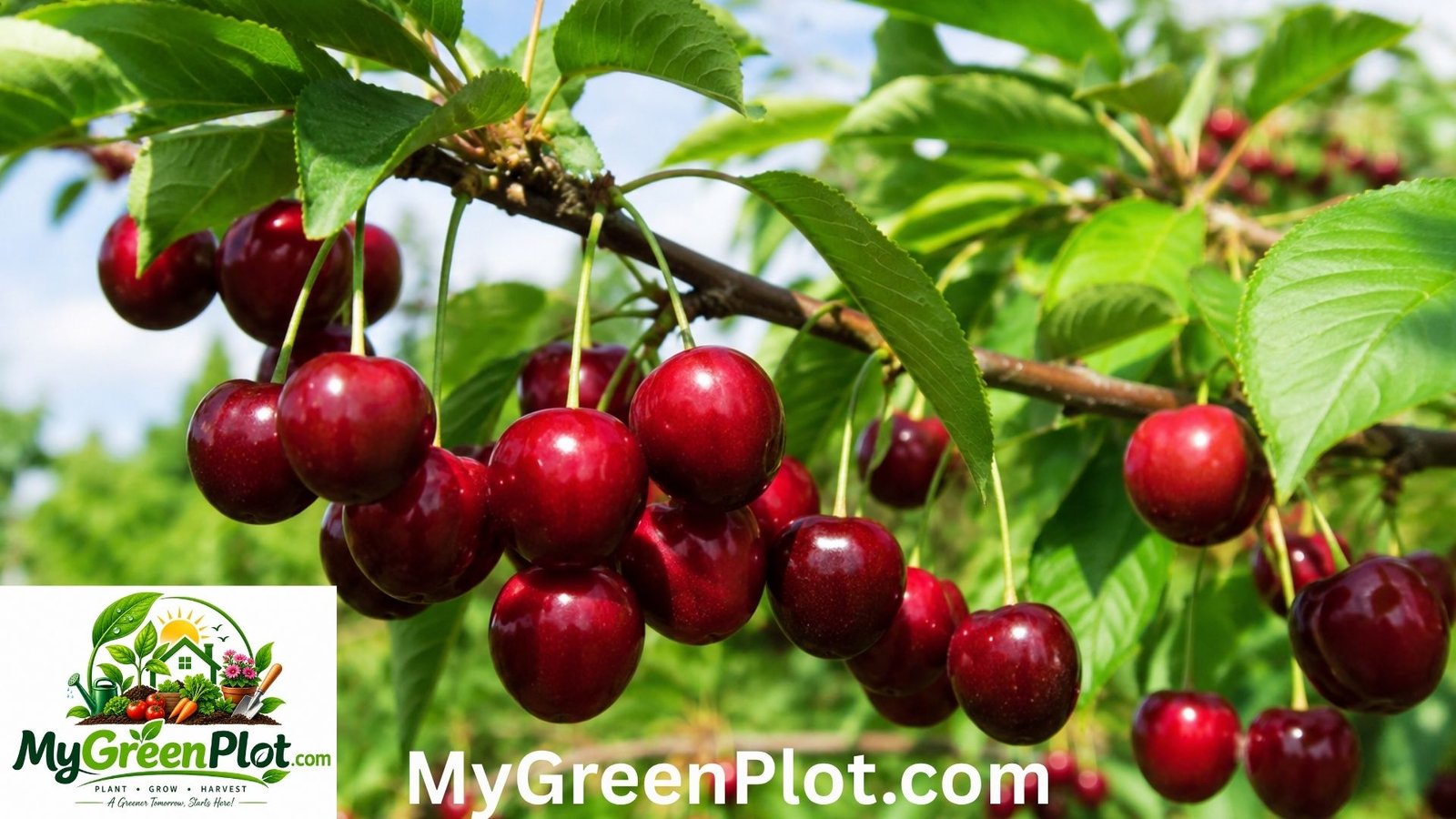
Fresh cherries are generally in season in the U.S. from late April or May through August, but the exact timing depends heavily on where the cherries were grown. California can start harvesting in late April or May, while Michigan’s fresh sweet-cherry season generally arrives around late June and can continue into August.
The season moves northward as spring and summer progress. California gets the early harvest, followed by major growing regions in the Pacific Northwest, while Michigan and other northern areas produce cherries later.
When are cherries in season in the USA?
The main U.S. fresh sweet-cherry season runs from late spring through summer, with California opening the season and northern growing regions extending availability into August.
If you are buying fresh cherries, think of the season roughly like this:
| Month | Typical U.S. cherry availability |
| April | Earliest California cherries |
| May | California cherries become widely available |
| June | California plus Pacific Northwest and other regions |
| July | Major summer cherry season |
| August | Later northern and Pacific Northwest crops |
The exact dates can move by several weeks because cherry trees respond strongly to winter temperatures and spring weather.
A warm spring can push harvest earlier. A cold spring can delay it.
When are cherries in season in California?
California cherries are generally in season from late April or May through June, making California one of the first major sources of fresh sweet cherries in the United States.
The California Cherry Board describes the commercial season as roughly six weeks, although the actual start and finish vary with weather and growing location. California’s orchards are spread across several parts of the state, so harvest does not begin everywhere on the same day.
Early California varieties include Brooks and Tulare, followed by familiar varieties such as Bing and Rainier.
That short window is one reason California cherries can seem to disappear almost as quickly as they arrive.
Which California cherries come into season first?
Brooks and Tulare are among the early California sweet-cherry varieties, appearing before the main Bing harvest.
Brooks produces a large, dark-red cherry with firm flesh, while Tulare is another early variety that reaches maturity ahead of Bing. Their earlier harvest gives California growers fruit to market before the main crop reaches its peak.
Bing cherries are one of the best-known sweet-cherry varieties and generally appear during the middle part of the California season. Their dark red to mahogany skin, firm texture, and sweet flavor make them popular for fresh eating.
Rainier cherries are easier to recognize because their yellow-golden skin develops a red blush. They are also sweet and firm, but their appearance is very different from a dark Bing cherry.
If you want California cherries at the point when several varieties overlap, May and early June are useful months to watch.
When are cherries in season in Michigan?
Michigan’s fresh sweet-cherry season generally runs from late June through August, making it considerably later than California’s early harvest.
Michigan’s climate delays spring development compared with California, so cherry trees flower and mature later. The result is a summer harvest that becomes especially important from late June into July.
Michigan also has a major tart-cherry industry. Montmorency is the state’s best-known tart cherry, and it is commonly used for pies, baking, juice, dried fruit, and other processed foods rather than eaten like a sweet Bing cherry.
So when someone says “Michigan cherries,” you need to ask which type they mean. Fresh sweet cherries and tart cherries are not the same crop.
When are Michigan tart cherries in season?
Michigan tart cherries are generally harvested during June and July, with the season extending into the summer depending on weather and growing conditions.
The Montmorency tart cherry is considerably more acidic than a Bing or Rainier cherry. That sharp flavor is useful in pies, sauces, juices, preserves, and other recipes where sugar or other ingredients balance the natural acidity.
Tart cherries can also remain available long after the fresh harvest because they are commonly frozen, dried, canned, or processed into juice.
That is why you may find Michigan tart cherries in stores outside the fresh summer season even though the trees themselves are harvested only during a relatively short period.
Why does California get cherries earlier than Michigan?
California cherries mature earlier because the state’s major growing regions experience a warmer spring than Michigan’s northern growing regions.
Cherry trees also require a period of winter chilling before they can resume normal growth. After that dormancy requirement is met, spring temperatures control how quickly buds develop, flowers open, and fruit progresses toward harvest.
California’s early-season advantage is significant enough that its sweet cherries can reach U.S. markets before Washington, Oregon, and Michigan crops are ready.
Michigan’s colder spring delays the same sequence, pushing its cherry harvest toward late June and July.
Why is cherry season so short?
A cherry’s development from bloom to ripe fruit happens on a relatively short timetable, with fruit growth occurring for roughly 60 days after bloom under suitable conditions.
Cherries also have a practical harvesting limit because ripe fruit needs to remain firm enough to survive picking, packing, transportation, and storage.
Unlike some fruits, sweet cherries do not continue ripening after harvest. Growers therefore need to pick them when they have reached the appropriate stage of maturity rather than harvesting them very early and expecting them to become fully ripe later.
Weather can make the harvest window even shorter. Cherry blossoms and developing fruit are vulnerable to frost, while rain close to harvest can cause mature cherries to split.
That combination makes cherry production unusually dependent on getting the weather right at several different stages.
When are cherries sweetest?
The sweetest cherries are usually those harvested at the proper stage of maturity rather than cherries picked too early for long storage.
For varieties such as Bing, look for fruit that is firm, plump, and deeply colored. A ripe Rainier cherry should have its characteristic yellow-golden base with a developed red blush rather than looking pale and immature.
Color alone is not enough. A cherry that is dark but soft, leaking, or badly bruised has already started deteriorating.
I usually pay more attention to firmness and the condition of the fruit and stems than to finding the darkest individual cherry in the container.
When should you buy cherries at a farmers market?
The best time to buy local cherries is usually during the middle of your area’s harvest, when enough fruit has ripened to give growers a strong selection of varieties.
For California, that often means May into early June. For Michigan, the useful window is generally late June through July.
At a farmers market, ask the grower which variety was harvested most recently. A freshly harvested Bing, Rainier, or other local variety can taste noticeably better than fruit that has spent several days moving through the distribution chain.
Cherry season is short, so local harvest dates are more useful than a fixed calendar date.
Sources: University of California Agriculture and Natural Resources | California Cherry Board | Michigan Department of Agriculture and Rural Development
