

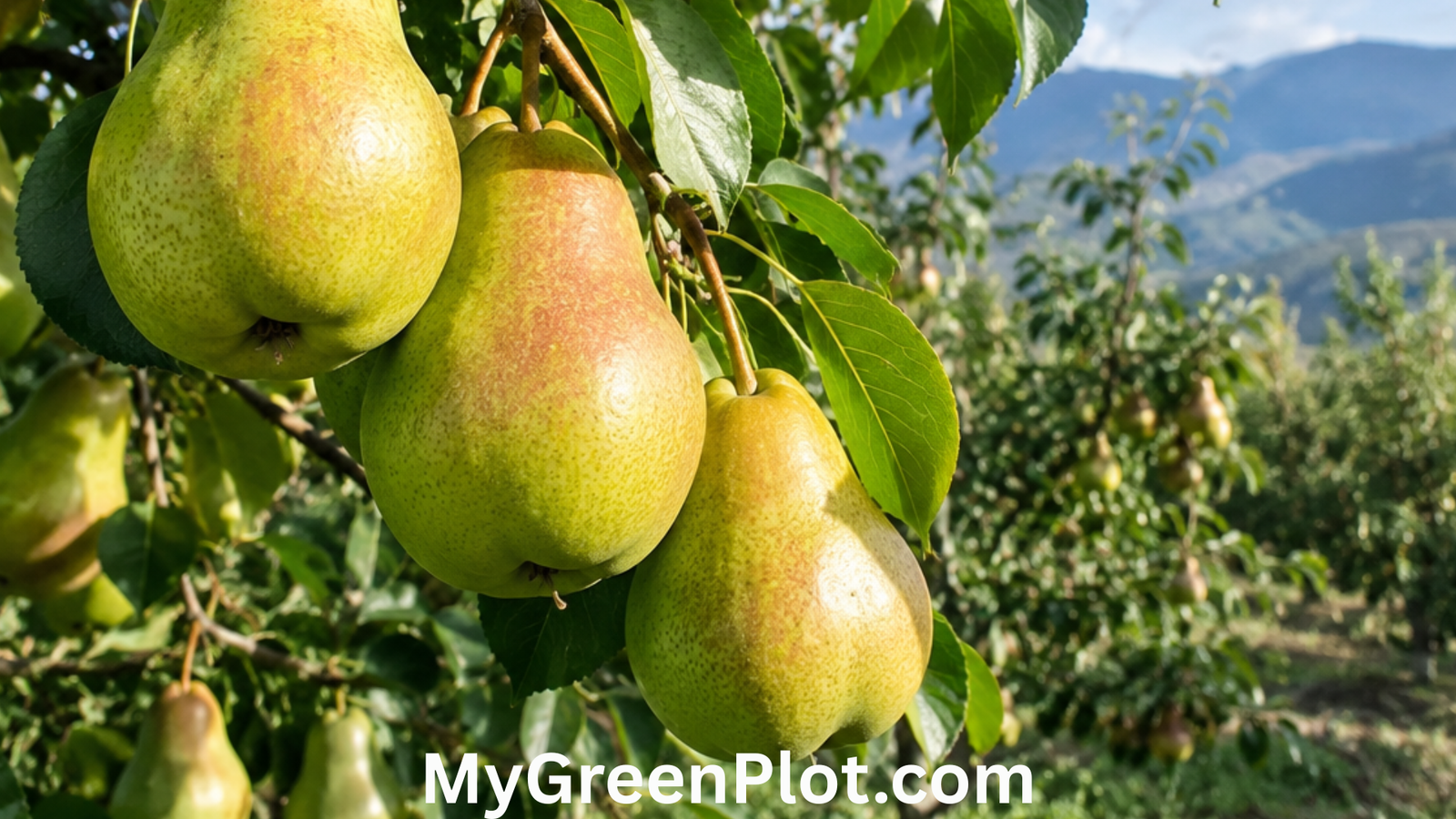
The pear shortage is not a uniform worldwide crisis in 2026, but some markets are still feeling the effects of earlier crop failures. According to the USDA Foreign Agricultural Service’s December 2025 Fresh Apples, Grapes, and Pears: World Markets and Trade report, global fresh pear production for the 2025/26 marketing year was forecast to fall 2% to 26.1 million metric tons. However, U.S. production was forecast to rebound to 565,000 metric tons after an exceptionally poor 2024 harvest. That means pear availability depends heavily on where you live, which variety you buy, and whether your local stores rely on domestic or imported fruit.
Read More :
Is There Really a Pear Shortage in 2026?
The 2026 pear supply situation varies by country, with lower projected global production offset by a stronger U.S. harvest. The USDA’s December 2025 forecast pointed to tighter supplies in China and Turkey, even as American growers recovered from the previous season’s losses.
China was forecast to produce 20.5 million metric tons of pears, a decrease of 480,000 metric tons, while Turkey’s projected production fell 30% to 461,000 metric tons. These declines explain why some international markets may face reduced availability even when pears remain plentiful elsewhere.
In the United States, the picture was more encouraging. USA Pears reported on December 2, 2025, that Washington and Oregon growers harvested 19 million boxes, a 78% increase over 2024. The recovery followed a particularly difficult growing season that had restricted supplies and contributed to the country’s unusually low pear production.
A shopper who cannot find a favorite variety should therefore check whether the problem affects all pears or just one type. A shortage of imported Chinese pears, for example, does not automatically mean that locally grown Bartlett or Anjou pears are unavailable.
What Caused the Pear Shortage?
Frost damage, unfavorable growing conditions, and declining orchard acreage contributed to the recent reduction in pear supplies, particularly in the United States and Turkey.
The USDA’s December 2024 global fruit trade report forecast U.S. pear production at just 470,000 metric tons for the 2024/25 marketing year, the lowest level since 1967/68. January freezes damaged pear trees in Washington, while cold weather during spring blossom further reduced the crop. Oregon and California also experienced weather-related production declines.
Pear trees are especially vulnerable to frost during flowering because damaged blossoms cannot develop into healthy fruit. Even when a tree survives the winter, a cold spell during bloom can sharply reduce the number of pears harvested months later.
Turkey faced a different but similarly damaging problem in spring 2025. The USDA attributed its projected 30% production decline for 2025/26 to frost damage. China’s smaller projected crop, meanwhile, was linked to drought in the provinces of Shandong and Shaanxi.
These events demonstrate why pear supplies cannot recover immediately after a bad season. Commercial orchards need a successful flowering and fruit-development cycle, and lost production cannot simply be replaced once the normal harvest window has passed.
Why Are Pears Still Expensive After a Better Harvest?
A larger harvest does not guarantee immediate price relief because retail prices also depend on storage costs, shipping, import availability, and the timing of market deliveries.
The USDA’s September 2025 Fruit and Tree Nuts Outlook forecast U.S. pear production at approximately 625,000 tons, up 22% from the previous year. Washington’s crop was forecast at 280,000 tons, Oregon’s at 210,000 tons, and California’s at 135,000 tons.
Those figures indicated a substantial recovery, but Washington’s projected crop was still 5% below its 2021–2023 average. A rebound from an unusually poor harvest is not necessarily a return to normal production.
The timing of that recovery also matters. Pears harvested in late summer and autumn must be sorted, packed, transported, and distributed before shoppers see the extra fruit. Retailers may continue selling inventory purchased during a tighter supply period, delaying the effect of a new harvest on shelf prices.
International trade adds another variable. The USDA forecast U.S. fresh pear imports at 80,000 metric tons and exports at 100,000 metric tons for 2025/26, reversing the previous season’s position as a net importer. Those changes can alter the availability of particular varieties in different markets.
For shoppers, the practical lesson is simple: compare the price per pound or kilogram, check the country of origin, and look at more than one variety before assuming that every pear has become expensive.
Which Pear Varieties Are Most Affected by the Shortage?
Bartlett and Anjou pears can have different availability patterns because they are harvested at different times and have different storage lives.
-
Bartlett pears: Washington and Oregon harvest Bartlett pears in August and early September. According to the USDA’s September 2025 outlook, fresh-market shipments generally wind down by February.
-
Anjou pears: These pears are harvested later in autumn and store longer, allowing fresh-market supplies to extend into the following summer.
-
Imported pears: Availability depends on the producing country’s harvest, export volumes, shipping schedules, and the variety supplied to the destination market.
The distinction matters when you shop. If Bartlett pears are missing late in the season, Anjou pears may still be available because they entered storage later and can remain marketable for longer.
Storage does not create new fruit, however. It allows sound, properly handled pears to be sold over a longer period, helping smooth out the gap between harvest seasons. A retailer that runs out of one variety may still have other pears in stock.
When Will Pear Supplies Return to Normal?
Pear availability should improve where the 2025 harvest recovery translated into greater market supply, but the timing of a full recovery depends on the next harvest and local distribution conditions.
The strongest evidence of improvement came from the Pacific Northwest, where USA Pears reported a 78% increase in the 2025 harvest compared with 2024. The USDA also forecast U.S. production to rise to 565,000 metric tons for 2025/26.
However, global production was still projected to decline 2% to 26.1 million metric tons. China’s reduced output and Turkey’s frost-damaged crop meant that the recovery was not universal.
There is no single date when every market will return to normal. In the United States, late-summer and autumn harvests replenish supplies, while cold storage extends the selling season for varieties such as Anjou. In import-dependent markets, availability also depends on the timing and volume of shipments from exporting countries.
For a more reliable local picture, check produce prices and country-of-origin labels over several weeks rather than relying on a single empty display or a temporary price spike.
What Should You Buy If Pears Are Unavailable?
Apples, quinces, and canned or frozen pears are practical alternatives when fresh pears are scarce or unusually expensive.
-
Apples: Choose firm varieties such as Fuji or Gala for snacks, baking, and lunchboxes when fresh pears cost more.
-
Quinces: These relatives of pears can replace them in cooked dishes, although quinces are much firmer and generally need cooking to become tender.
-
Canned pears: Choose unsweetened or juice-packed pears if you want a convenient substitute for fresh fruit in desserts, oatmeal, or fruit salads.
-
Frozen pears: Frozen fruit works well in smoothies, sauces, and baking when fresh texture is not essential.
-
Another pear variety: If Bartlett pears are unavailable, check for Anjou, Bosc, or Comice pears before switching to a different fruit.
When you do find fresh pears at a reasonable price, select fruit that is firm and free from major bruises. Store unripe pears at room temperature until they yield slightly near the stem, then refrigerate ripe fruit to slow further softening.
Sources: USDA Foreign Agricultural Service | USDA Economic Research Service | USA Pears
