

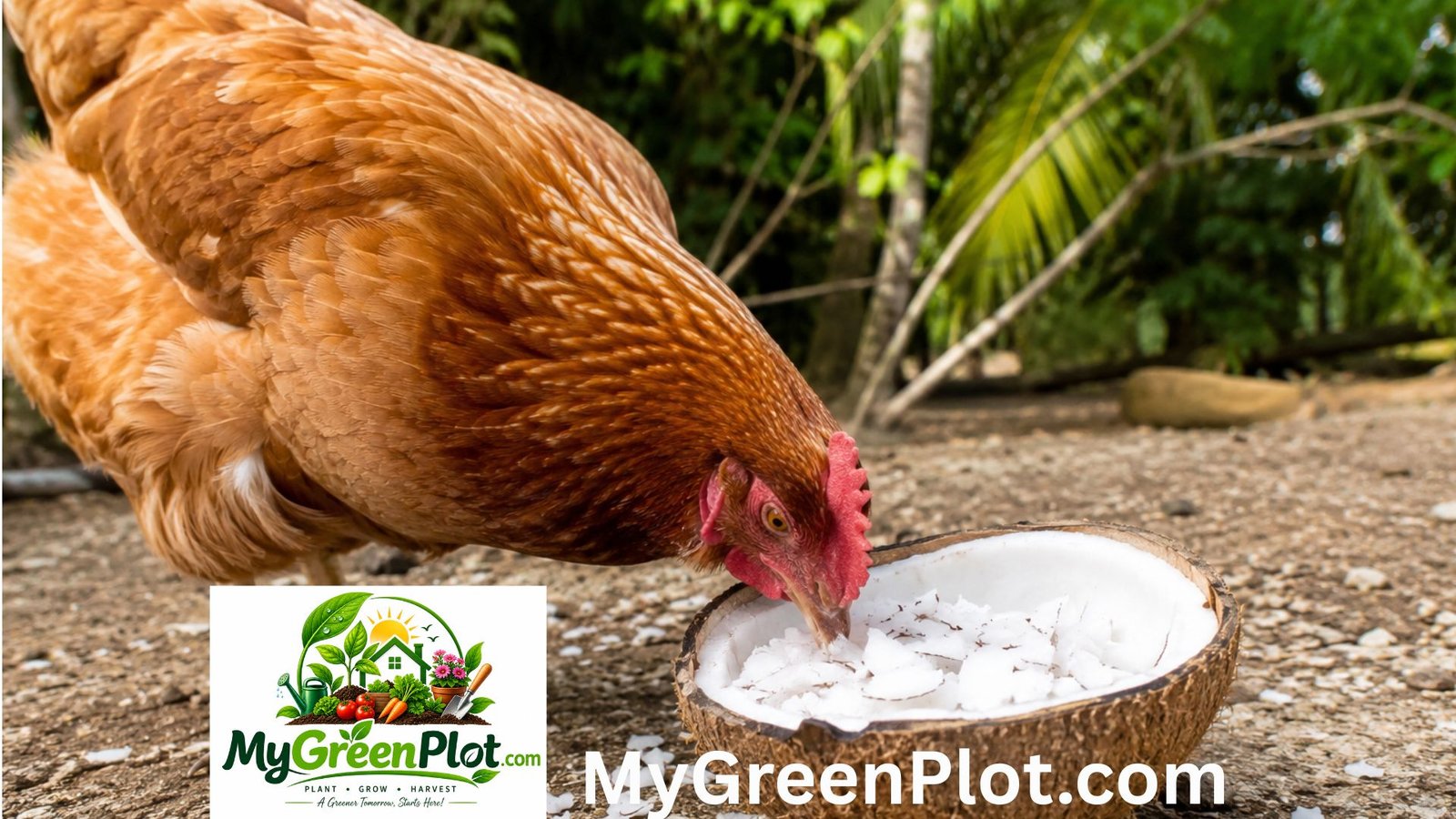
Can Chickens Eat Coconut Flakes?
Yes, chickens can eat plain, unsweetened coconut flakes in small amounts, provided the coconut does not contain added sugar, chocolate, excessive salt, or other unsuitable ingredients. Coconut is not toxic to chickens, but its relatively high fat content means it works better as an occasional treat than as a regular part of a flock’s diet.
For example, if you have a bag of unsweetened dried coconut flakes, you can offer a small amount to healthy adult chickens. I would not replace their normal layer feed with coconut because commercial poultry feed is formulated to provide the protein, calcium, vitamins, minerals, and energy chickens need for sustained health and egg production.
The important distinction is the word plain. A handful of unsweetened coconut is very different from a sweetened coconut dessert.
Plain Unsweetened Coconut Is the Best Choice for Chickens
Plain coconut flakes with no added sugar are the simplest coconut treat to offer chickens because the ingredient list is easy to evaluate.
Look at the package before feeding it. Ideally, the ingredients should be essentially coconut, without added sugar, chocolate, artificial flavorings, or large amounts of salt.
Dried coconut can contain a substantial amount of fat, so portion size matters even when the product itself is plain. A chicken that fills up on calorie-dense treats may eat less of its nutritionally complete poultry ration.
Fresh coconut flesh is also edible for chickens, but hard pieces should be chopped into manageable portions. The goal is to make the treat easy for the flock to pick apart rather than giving them a large, hard chunk.
How Much Coconut Flakes Can Chickens Eat?
A small flock should receive coconut as a treat rather than a staple, with the amount kept small enough that it does not replace the chickens’ normal feed.
For a few adult chickens, start with roughly 1–2 tablespoons of plain coconut flakes shared among the flock and observe how they respond. You can adjust the amount based on flock size, but the treat should remain noticeably smaller than their regular daily feed.
The 1–2 tablespoon amount is a practical starting point rather than a universal veterinary prescription because chicken size, age, diet, and health vary.
If five chickens receive 2 tablespoons, each bird gets only a fraction of the total. If you give that same amount to one chicken, the portion is much more concentrated.
I prefer scattering a small amount across clean ground or into a treat dish. That lets several birds eat instead of allowing the dominant hen to consume everything.
Why Coconut Should Not Replace Chicken Feed
Coconut flakes cannot provide the balanced nutrition supplied by a complete poultry ration.
A laying hen needs a diet that supplies appropriate levels of protein, energy, calcium, phosphorus, vitamins, and trace minerals. Layer feeds are specifically formulated around those requirements.
Coconut does not provide that same nutritional balance. Its fat content can make it calorie-dense while leaving important nutrients underrepresented.
This matters most with laying hens. If a hen fills up on treats but eats less of her formulated layer feed, she may receive less calcium and other nutrients needed for normal egg production and skeletal health.
For that reason, give coconut after the flock has access to its normal feed, rather than using coconut to replace breakfast or dinner.
Can Baby Chicks Eat Coconut Flakes?
Baby chicks should not be given coconut flakes as a routine treat because their first weeks require a carefully balanced starter diet.
Chick starter feed is formulated for rapidly growing birds and generally contains a much more appropriate nutrient profile for young poultry than kitchen treats.
A chick only a few weeks old has different nutritional needs from a mature laying hen. Adding calorie-dense treats can also make it easier for young birds to consume less of their complete starter ration.
I would save coconut treats for healthy adult chickens rather than experimenting with them during the chick stage.
Can Chickens Eat Sweetened Coconut Flakes?
Sweetened coconut flakes are a poor choice for chickens because they contain added sugar that provides little nutritional value to the bird.
Many baking products sold as coconut flakes or shredded coconut contain added sugar. Check the nutrition and ingredient labels rather than assuming every package of coconut is plain.
A product containing coconut and sugar is not equivalent to dried coconut containing only coconut.
The same rule applies to coconut products covered with chocolate or candy. Chocolate should not be offered to chickens, so chocolate-covered coconut belongs in the human snack category rather than the chicken treat category.
What About Coconut With Salt or Flavoring?
Salted or flavored coconut products should be avoided because chickens do not need heavily seasoned human snack foods.
A plain coconut product gives you much better control over what your flock consumes. A flavored product may contain sugar, salt, oils, preservatives, or other ingredients that have no useful role in a chicken’s diet.
For example, a coconut snack containing cocoa powder, chocolate, large amounts of sodium, or added sweeteners should not be treated as a chicken-safe version of plain coconut.
When the ingredient list looks more like a dessert than a single-ingredient food, choose something simpler.
Can Chickens Eat Fresh Coconut?
Fresh coconut flesh can be eaten by chickens when it is broken into small, manageable pieces.
Fresh coconut contains more moisture than dried coconut, which changes its texture and makes it different from the flakes commonly used in baking.
Remove the hard outer shell before offering coconut flesh. Chickens can peck at many foods, but there is no reason to give them a large, rigid piece of shell with their treat.
Cutting the flesh into small pieces also makes it easier for several birds to share.
If you notice that your chickens ignore the coconut while happily eating their normal feed, there is no reason to force the treat. Chickens can have strong individual food preferences.
Can Chickens Eat Coconut Shell?
Coconut shell should not be offered as a food item because it is extremely hard and provides no useful nutritional benefit.
The shell is a structural part of the coconut rather than the edible flesh. Giving chickens access to large pieces creates an unnecessary physical hazard without adding meaningful nutrition.
If you are preparing a fresh coconut for your flock, remove the shell and offer only small pieces of the edible flesh.
The same principle applies to other hard food materials: edible does not mean every part of the original food should be given to a chicken.
Is Coconut Good for Chickens?
Coconut can be a useful occasional treat because plain coconut provides energy and contains fat and fiber, but it is not a nutritional necessity for chickens.
The useful part is the variety it can add to an otherwise balanced diet. The limitation is its calorie density.
A healthy adult hen receiving a complete commercial ration does not need coconut to meet her basic nutritional requirements. Coconut is therefore better viewed in the same category as other occasional treats rather than as a supplement.
If your flock already receives several treats during the day, adding coconut may simply increase the total treat load. Keep the overall diet centered on the formulated feed.
What Should You Watch for After Feeding Coconut?
A small amount of plain coconut should generally be tolerated by healthy adult chickens, but unusual digestive changes are a reason to stop the treat.
Watch the flock after introducing any unfamiliar food. Changes such as persistent diarrhea, marked lethargy, refusal to eat, or other obvious illness signs should not be dismissed as a normal reaction to coconut.
The safest approach is to introduce a new treat in a very small quantity instead of filling a feeder with it.
If one chicken develops a problem while the others remain normal, remove the treat and consider whether that individual bird may have another health issue. Persistent symptoms require veterinary advice rather than more dietary experimentation.
How to Serve Coconut Flakes Without Making a Mess
The easiest way to feed coconut flakes is to offer a small quantity in a clean dish or scatter them over a clean feeding area.
Dry coconut flakes are lightweight, so wind can blow them around a backyard run. A shallow feeder keeps more of the food together and makes it easier to see how much the chickens actually consume.
For a flock of 4–6 adult chickens, a tablespoon or two is enough for a first trial. If they eat it quickly, resist the temptation to keep adding more simply because they enjoy it.
You can also mix a small amount with another appropriate treat, but I prefer introducing coconut by itself first. That makes it easier to identify which food caused a digestive reaction if something goes wrong.
When Should You Skip Coconut Altogether?
Skip coconut treats when the product contains questionable ingredients or when a chicken is already experiencing digestive problems.
A bag of plain unsweetened coconut with one simple ingredient is much easier to evaluate than a processed coconut snack containing sugar, chocolate, flavorings, and preservatives.
You should also avoid using treats to compensate for poor-quality poultry feed. A complete chicken ration should remain the foundation of the diet, while foods such as plain coconut stay occasional additions.
For backyard chickens, simple feeding usually works best: complete feed as the nutritional foundation, clean water available at all times, and small quantities of suitable treats.
Sources: Merck Veterinary Manual | University of Florida IFAS Extension | MSD Veterinary Manual

2 Comments
Pingback: Can Chickens Eat Banana? What Backyard Chicken Owners Should Know - mygreenplot.com
Pingback: Can Chickens Eat Jalapeños? What Backyard Flock Owners Should Know - mygreenplot.com