

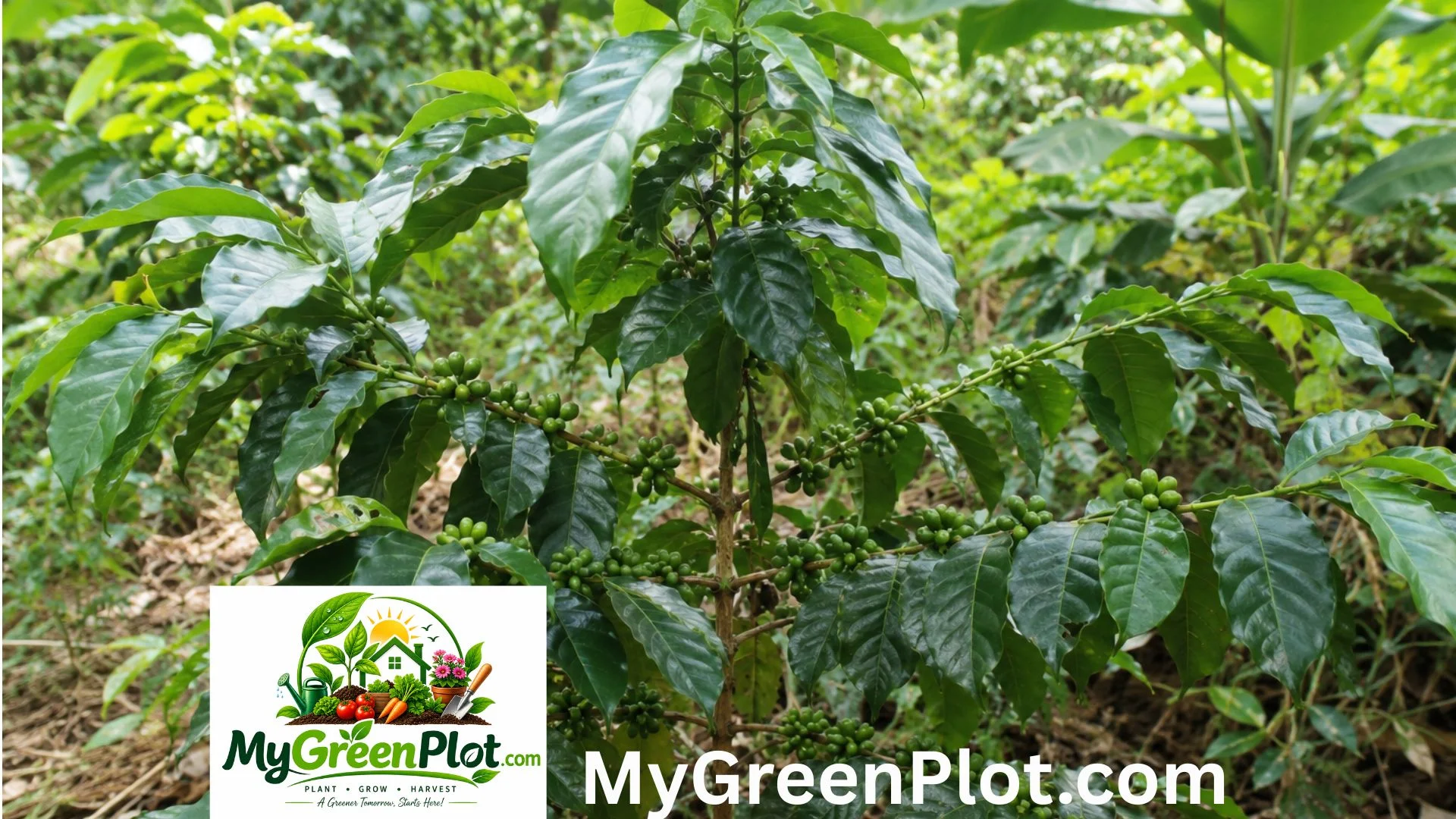
Yes, you can grow coffee in Florida, especially in the warmer southern parts of the state, but growing a healthy coffee plant is easier than producing a worthwhile harvest of beans. Coffea arabica, the species commonly grown for high-quality coffee, prefers temperatures around 60–70°F (16–21°C), partial shade, consistent moisture, and well-drained acidic soil.
Florida gives coffee several things it needs: warmth, humidity, and a long growing season. The difficult part is that Florida also brings intense summer heat, heavy rain, occasional freezes, strong winds, and periods of waterlogged soil.
I would treat coffee as a warm-climate specialty crop rather than a plant you can put anywhere in the yard and forget. Your exact location matters.
Can coffee plants survive Florida’s climate?
Coffee can grow outdoors in Florida when winter temperatures stay above damaging cold levels and the plant receives protection from extreme weather.
Coffea arabica is particularly sensitive to cold compared with many ordinary Florida landscape plants. A brief temperature near 32°F (0°C) can cause serious injury, while prolonged freezing conditions can kill young growth or an entire small plant.
Southern Florida gives coffee the best outdoor conditions because winter freezes are much less common there. Central Florida can work in protected locations, but a cold-sensitive coffee plant may need protection during unusual winter events.
Northern Florida is more challenging because freezes occur more frequently. You may still grow coffee there in a container that can be moved indoors or into a protected structure when temperatures fall sharply.
The difference between survival and production is important. A Coffea arabica plant might survive a marginal location for several years but repeatedly lose flowers or young growth after cold weather, leaving you with very little coffee.
Which coffee species should you plant in Florida?
Coffea arabica is generally the most appealing choice for a Florida home grower because it produces coffee associated with high-quality specialty beans and remains relatively compact when pruned.
Arabica coffee typically performs best under moderate temperatures rather than extreme heat. It also tends to have higher quality potential than Coffea canephora, commonly called robusta, although the final flavor depends heavily on variety, growing conditions, harvesting, processing, roasting, and storage.
Coffea canephora is more tolerant of heat than Arabica and has strong commercial importance in warmer coffee-growing regions. However, its preferred growing environment does not automatically make it the best backyard choice for every Florida garden.
If your goal is simply to grow a coffee plant as an edible landscape plant, Arabica is a practical starting point. Look for a named cultivar from a reputable nursery rather than planting an unidentified seedling whose genetics and performance are unknown.
How much sunlight does coffee need in Florida?
Coffee plants generally perform better with bright filtered light or partial shade than with relentless afternoon sun in Florida.
A coffee plant growing beneath a canopy of taller trees can receive strong morning light while avoiding the hottest part of the afternoon. That setup can be especially useful during Florida’s summer, when direct sunlight combines with high temperatures and dry periods.
Young Coffea arabica plants are particularly vulnerable to sudden exposure to intense sunlight. Leaves that were grown under nursery shade can develop pale, scorched, or brown areas when moved directly into full Florida sun.
I would introduce a young plant to stronger light gradually over several weeks rather than moving it from a shaded nursery bench directly into a completely exposed yard.
A location with morning sun and afternoon protection is often easier to manage than a spot receiving intense sun from sunrise to sunset.
What soil does coffee need in Florida?
Coffee plants need fast-draining soil because saturated roots can suffer even when the plant receives plenty of Florida sunshine.
A soil pH around 6.0–6.5 is a reasonable target for a home-grown Coffea arabica plant, although coffee can tolerate somewhat different conditions when nutrients remain available.
Florida’s sandy soils can drain rapidly, which prevents standing water but can also allow nutrients to wash through the root zone quickly. Heavy or compacted soil creates the opposite problem because frequent summer rain can leave roots sitting in poorly aerated soil.
Before planting coffee directly in the ground, dig a hole and observe how quickly water disappears after filling it. If water remains for hours after a normal irrigation test, improve drainage or choose a raised planting area instead.
Container-grown coffee gives you more control. A large container filled with an airy, well-draining growing mix can prevent many of the root problems associated with poorly drained ground.
How much water does a Florida coffee plant need?
Coffee needs consistent moisture, but constantly wet soil is more dangerous than a short period of moderate dryness.
A mature coffee plant can use substantial water during Florida’s hot growing season, especially when planted in sandy soil. However, watering should depend on soil moisture rather than a fixed daily schedule.
Check the upper several inches of the growing medium before irrigating a container-grown plant. If the surface has dried while the deeper root zone remains moist, adding more water immediately can keep the roots unnecessarily wet.
During periods of heavy Florida rainfall, you may need to water less frequently or not at all. During a hot, dry spell, the same plant may require additional irrigation.
A 2–4 inch layer of organic mulch can help moderate soil temperature and reduce evaporation, but keep the mulch several inches away from the trunk to reduce the risk of persistent moisture against the stem.
How long does a coffee plant take to produce coffee in Florida?
A coffee plant commonly needs several years to reach dependable fruit production, even when Florida provides suitable warmth.
Young Coffea arabica plants may begin flowering after roughly 3–4 years under favorable growing conditions, although the exact timing depends on the plant’s age when purchased, cultivar, sunlight, nutrition, and environmental stress.
Coffee flowers are followed by green coffee cherries that gradually enlarge and change color as they mature. Depending on conditions and variety, fruit development can take roughly 6–9 months.
The ripe fruit is commonly called a coffee cherry even though the coffee bean is actually the seed inside the fruit.
This is one reason coffee is not a quick backyard crop. Planting a small coffee tree today does not mean you will be roasting your own beans next season.
Do you need more than one coffee plant in Florida?
Many coffee plants can produce fruit without requiring a second variety, but pollination behavior depends on the species and cultivar.
Coffea arabica is commonly self-fertile, which means a single healthy plant can potentially produce fruit. Having several plants can still increase the number of flowers available and give you more fruit to harvest.
For a home garden, planting two or more compatible coffee plants can also make the project more worthwhile because coffee cherries contain relatively little usable seed compared with the size of the whole plant.
If you have limited space, one healthy Arabica plant is enough to experiment with. If your goal is to harvest and process your own coffee regularly, several productive plants make much more sense.
What happens to coffee during a Florida cold snap?
A sudden Florida freeze can damage coffee leaves, stems, flowers, and developing fruit even when the plant had been growing strongly for months.
Cold injury becomes especially concerning as temperatures approach the freezing point of 32°F (0°C). Young plants in containers are easier to protect because you can move them into a garage, enclosed porch, greenhouse, or other suitable protected area.
For an established landscape coffee plant, location is your first defense. Planting near a building can reduce exposure to cold wind, while an overhead canopy can sometimes provide limited protection from radiational cooling.
Do not wait until a freeze is already occurring before deciding what to do. A coffee plant that has reached several feet tall is much harder to protect than a small container specimen.
Can Florida’s summer heat hurt coffee plants?
Florida’s summer heat can stress coffee when high temperatures combine with intense sunlight, dry roots, or poor airflow.
Arabica coffee is not naturally adapted to unlimited exposure to extreme heat. When leaf temperature rises sharply, the plant can lose water faster than its roots can replace it, especially in a small container.
Afternoon shade is therefore useful in many Florida gardens. A coffee plant receiving filtered light beneath taller vegetation can experience a gentler environment than one sitting against a south- or west-facing wall.
Heat stress can also make other problems worse. A dehydrated plant has fewer resources available for producing new leaves, flowers, and fruit.
How should you protect coffee from Florida hurricanes?
Coffee plants need protection from strong winds because their leaves and branches can be damaged long before the root system fails.
A coffee tree grown as a small, well-pruned plant is easier to protect than a neglected specimen allowed to become 12–15 feet tall. Keeping the plant at a manageable height also makes harvesting much easier.
Container-grown coffee has an advantage before severe weather because you can move it into a protected structure. Large in-ground trees obviously cannot be relocated, so site selection becomes much more important.
Avoid placing coffee where repeated hurricane winds are funneled between buildings. A sheltered garden position with some protection from prevailing wind can reduce mechanical damage.
Can you grow coffee in a Florida container?
A container is one of the easiest ways to grow coffee in parts of Florida where winter cold is a concern.
A young Coffea arabica plant can remain in a large container while you learn how it responds to your local climate. The container also allows you to move the plant during unusual cold events.
Choose a container with drainage holes and enough volume to support the plant without keeping the root system permanently saturated. A container that is too small dries rapidly during Florida heat, while an oversized container filled with wet soil can stay damp for too long.
Container coffee also needs regular nutrient management because frequent watering can move soluble nutrients below the active root zone.
I prefer containers for northern and central Florida when the goal is experimentation rather than establishing a permanent coffee tree in the landscape.
What pests and diseases should Florida coffee growers watch?
Coffee plants can face insect and disease pressure in Florida because warm, humid conditions support many organisms throughout a long growing season.
Scale insects can appear as small, immobile bumps on stems and leaves, while aphids may cluster around tender new growth. Heavy infestations can weaken the plant by removing sap from developing tissues.
Fungal problems become more likely when leaves remain wet for long periods and airflow is poor. Crowded branches and continuously wet foliage create a better environment for disease than an open, well-managed canopy.
Inspect your coffee plant at least once a week during active growth. Look underneath leaves, around new shoots, and along stems rather than checking only the upper leaf surfaces.
Early detection is much easier to manage than a severe infestation covering an entire coffee tree.
Can one Florida coffee plant produce enough beans for your kitchen?
A backyard coffee plant can produce usable coffee cherries, but the harvest from one young plant may be far smaller than a beginner expects.
Every ripe cherry must be harvested, processed to remove the fruit, dried correctly, hulled, and roasted before it becomes familiar brown coffee.
The seeds inside the cherries are initially green rather than the dark brown color associated with roasted coffee. Roasting changes their chemistry, color, aroma, size, and flavor.
That means growing coffee is only the first part of the process. If you harvest 1 pound of ripe cherries, you do not end up with 1 pound of roasted coffee.
Home growers should think of the first harvest as an experiment. You are learning whether your Florida location can flower the plant, set fruit, mature the cherries, and produce beans that can be processed successfully.
Where in Florida is coffee easiest to grow?
Southern Florida generally offers the best outdoor conditions for coffee because winter cold is less limiting than in northern parts of the state.
Central Florida can support coffee in protected locations, particularly when the plant receives afternoon shade and can be protected during unusual cold events.
Northern Florida presents the greatest challenge because freezing temperatures are more common. Container culture or protected structures can make coffee more practical there.
Your USDA hardiness zone is useful, but it is not the only factor. Two gardens in the same general zone can have very different conditions because of wind exposure, elevation, nearby buildings, soil drainage, shade, and cold-air movement.
A protected backyard can therefore outperform a more exposed site even when both gardens are only a few miles apart.
Is growing coffee in Florida worth trying?
Coffee is worth growing in Florida if you enjoy the process and want to experiment with a crop that takes several years to reach meaningful production.
A healthy Coffea arabica plant can become an attractive evergreen specimen while also giving you the possibility of harvesting your own coffee cherries. The project becomes much more practical when you choose a warm location, provide filtered sunlight, maintain well-drained soil around pH 6.0–6.5, and protect the plant from freezing temperatures.
If you live in a colder part of Florida, start with a container rather than committing an expensive landscape planting. A movable plant gives you a much better chance of protecting it when temperatures suddenly approach 32°F (0°C).
Sources: University of Florida IFAS | USDA | World Coffee Research
