

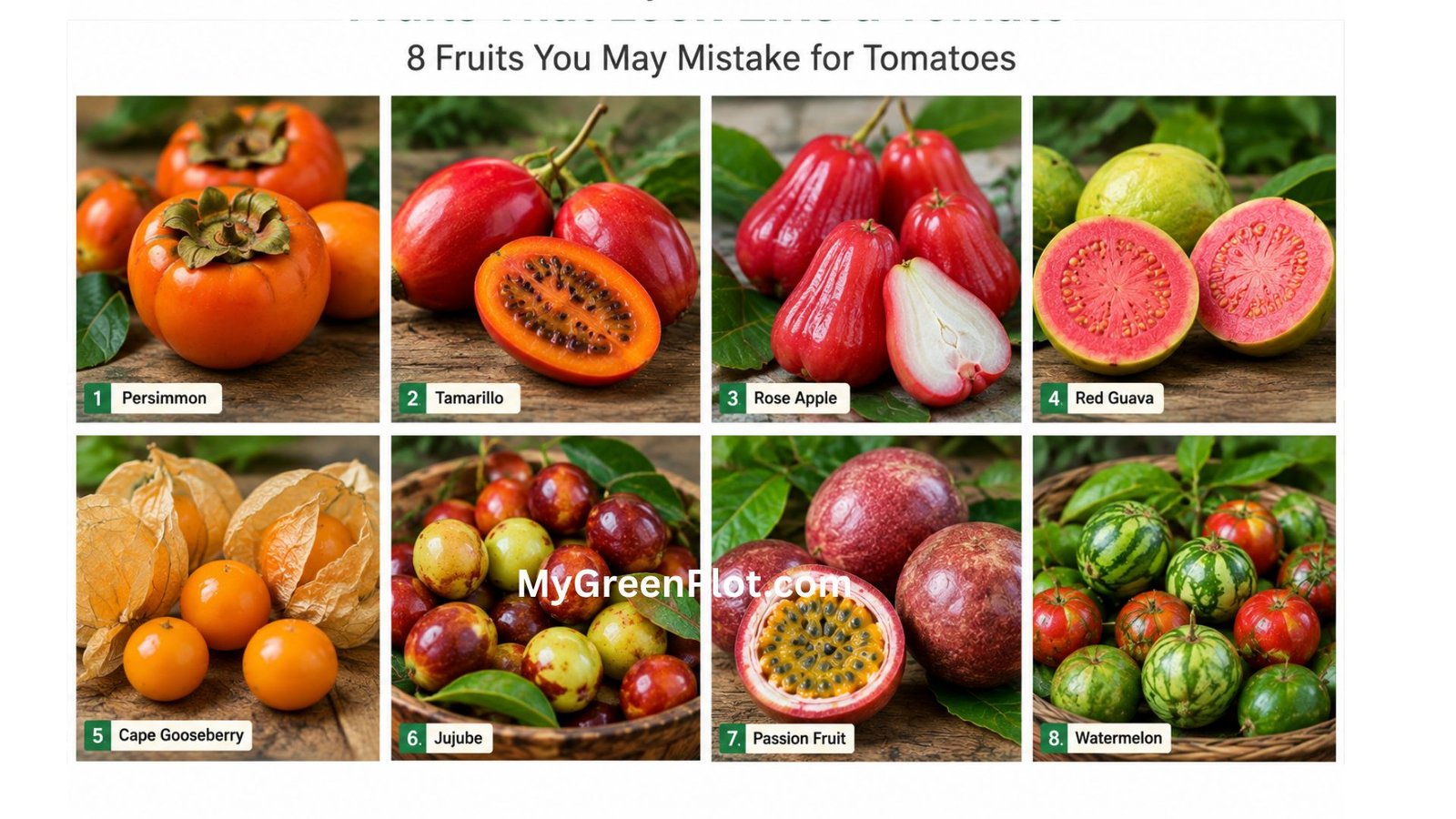
When walking through a market or browsing the produce section, you may come across fruits that look surprisingly similar to tomatoes. Their round shapes, smooth skins, and bright red, orange, or yellow colors can make them difficult to identify at first glance. However, their flavor, texture, botanical classification, and culinary uses can be quite different.
If you are curious about fruits that look like a tomato, several interesting varieties are worth learning about. Some are closely related to tomatoes, while others only resemble them in appearance.
Persimmon
Persimmons are among the most recognizable fruits that look like a tomato. They are usually round or slightly flattened and can have smooth orange or reddish-orange skin. Some varieties have a shape that closely resembles a ripe tomato.
The flavor depends on the variety and ripeness. Fuyu persimmons are generally firm and sweet, while Hachiya persimmons become very soft and custard-like when fully ripe.
Unlike tomatoes, persimmons are typically eaten as sweet fruit. They can be enjoyed fresh, added to salads, or used in desserts, baked goods, and smoothies.
Red Tamarillo
Tamarillo, sometimes called the tree tomato, is another fruit that can easily remind people of a tomato. It is oval rather than perfectly round and usually has smooth red, orange, or yellow skin.
Despite its nickname, tamarillo is not the same fruit as a conventional tomato. It has a distinctive sweet-tart flavor and juicy flesh containing numerous small seeds.
Tamarillos can be eaten fresh or used in sauces, chutneys, desserts, and beverages. Their unusual combination of sweetness and acidity makes them particularly versatile.
Rose Apple
Rose apples are another fruit that can occasionally resemble small tomatoes, particularly certain varieties with smooth red or pink skin. They are generally round, oval, or bell-shaped.
The inside is quite different from a tomato. Rose apples have crisp, juicy flesh and a mild, refreshing flavor that can have floral or slightly sweet notes.
They are commonly eaten fresh and may also be incorporated into salads, preserves, and other preparations.
Red Guava
Red or pink-fleshed guavas can look somewhat tomato-like because of their rounded shape and smooth green, yellow, or reddish skin. Although many guavas have a distinctive bumpy or pear-like appearance, some varieties are quite round.
When cut open, guava reveals a characteristic center filled with small edible seeds. The flesh may be white, pink, or red depending on the variety.
Guava has a sweet, fragrant flavor and can be eaten fresh or used in juices, jams, jellies, smoothies, and desserts.
Cape Gooseberry
Cape gooseberries are small, round fruits with a yellow to orange color. Their size and smooth appearance can make them look somewhat like miniature yellow tomatoes.
One of their most distinctive characteristics is the papery husk that surrounds the fruit. Once the husk is removed, the smooth fruit underneath becomes visible.
Cape gooseberries have a sweet and slightly tart flavor. They are often eaten fresh and can also be used as toppings for desserts, salads, and baked dishes.
Jujube
Fresh jujubes can also appear surprisingly similar to small tomatoes. Depending on their stage of ripeness and variety, they may have smooth green, yellow, reddish, or brownish skin.
Fresh jujubes are crisp and juicy, with a flavor that becomes sweeter as they mature. Their texture is quite different from that of a ripe tomato.
Jujubes are eaten fresh in many regions and can also be dried. Dried jujubes have a sweeter, softer texture and are commonly used in various culinary preparations.
Red Passion Fruit
Some passion fruit varieties can create a tomato-like impression because of their rounded shape and smooth reddish or purple skin. However, the similarity is mainly visual.
When opened, passion fruit looks completely different from a tomato. It contains aromatic pulp and numerous small, edible seeds. Its flavor is strongly sweet-tart and highly fragrant.
Passion fruit is commonly eaten with a spoon, mixed into drinks, added to desserts, or used as a topping for yogurt and other foods.
Watermelon Tomato Look-Alikes and Other Similar Fruits
Some fruits may resemble tomatoes simply because they share a round shape and smooth skin. Small melons, certain plum-like fruits, and other colorful varieties can sometimes create a similar appearance, especially when viewed from a distance.
The important point is that appearance alone is not enough to identify a fruit. Size, color, stem structure, texture, smell, and the appearance of the inside can all help distinguish one fruit from another.
If you encounter an unfamiliar fruit that looks like a tomato, cutting it open carefully can often reveal its true identity through its flesh, seeds, and internal structure.
Frequently Asked Questions
1. What fruit looks most like a tomato?
Persimmons are among the fruits that can look most like tomatoes because some varieties are round, smooth, and orange-red. Tamarillos can also look tomato-like, although they are usually more oval.
2. Is tamarillo the same as a tomato?
No. Tamarillo is a different fruit from the common tomato. It is sometimes called a tree tomato because of its appearance and some similarities in culinary use.
3. Are persimmons related to tomatoes?
No. Persimmons and tomatoes belong to different plant genera and species. Their similar appearance is primarily a result of their shape and color rather than close botanical relationship.
4. Which tomato-like fruit is sweet?
Persimmons are generally sweet when ripe, while tamarillos often have a more complex sweet-and-tart flavor. Cape gooseberries also have a pleasant sweet-tart taste.
5. How can I identify a fruit that looks like a tomato?
Look at its size, shape, skin color, texture, smell, and stem. Cutting it open can provide additional clues because different fruits have distinctive flesh, seed patterns, and internal structures.
Conclusion
There are several interesting fruits that look like a tomato, including persimmons, tamarillos, rose apples, guavas, cape gooseberries, jujubes, and some varieties of passion fruit. Although these fruits may share a similar round shape or bright color, they differ considerably in flavor, texture, botanical classification, and culinary uses.
Learning to recognize these differences makes it easier to identify unfamiliar produce and discover new fruits. The next time you see something that looks like a tomato, it may be worth taking a closer look—you could be looking at an entirely different fruit.

1 Comment
Pingback: Fruits That Look Like Grapes: Discover Similar Fruits - mygreenplot.com