

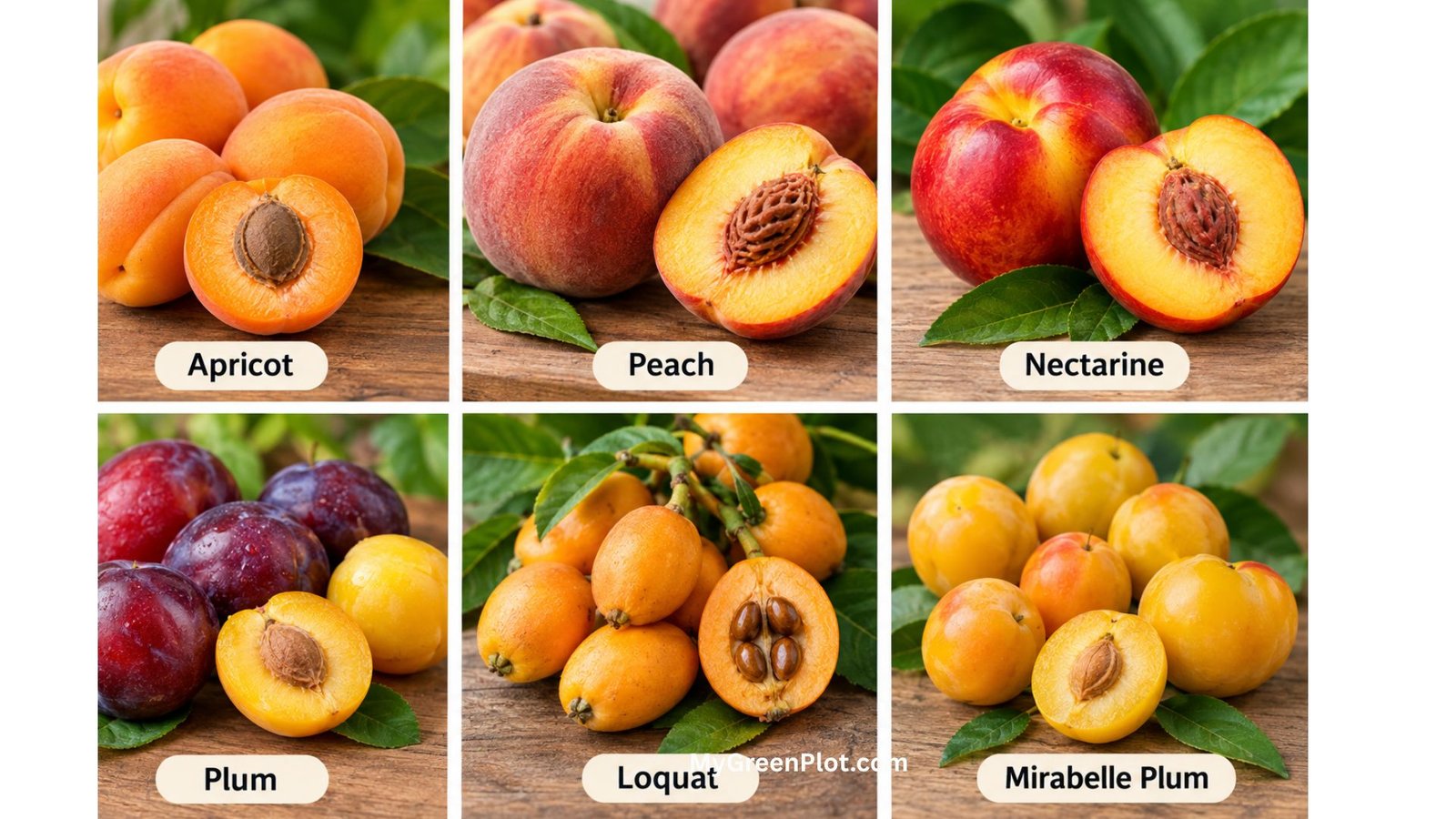
If you enjoy the soft texture, golden color, and sweet-tart flavor of apricots, you may have noticed several other fruits that look remarkably similar. Some have nearly the same orange skin and round shape, while others resemble apricots because they have similar flesh, size, or stone-like seeds.
In this guide, we’ll explore fruits that look like apricots, explain how they differ, and help you identify them by appearance, flavor, texture, and common uses.
What Makes a Fruit Look Like an Apricot?
Apricots are small stone fruits with smooth or slightly fuzzy skin, typically ranging from yellow to orange. They usually have soft, juicy flesh surrounding a single hard pit.
Fruits that resemble apricots often share several of these characteristics. They may be similar in:
- Size and round or oval shape
- Yellow, orange, or reddish-orange skin
- Soft and juicy flesh
- Sweet or slightly tart flavor
- A single large pit in the center
However, appearance alone can sometimes be misleading. Fruits from different plant families can look alike while having noticeably different flavors and textures.
Click For More : Fruits That Look Like Grapes
Peaches
Peaches are among the most recognizable fruits that look like apricots. They are also stone fruits and generally have yellow or orange flesh surrounding a large pit.
The biggest visual difference is usually size. Peaches tend to be larger than apricots and have noticeably fuzzy skin. Their flesh is also typically juicier and softer when ripe.
Like apricots, peaches can be eaten fresh, sliced into desserts, used in jams, or added to salads and baked dishes. Their sweet flavor makes them a popular substitute when apricots are unavailable.
Nectarines
Nectarines can look remarkably similar to apricots because both are small-to-medium-sized stone fruits with orange or yellow coloring. The main difference is the skin: nectarines have smooth skin, whereas peaches usually have fuzzy skin.
Nectarines are often firmer and juicier than apricots, with a sweet flavor that can include a mild tang. Their smooth surface also makes them easy to distinguish from fuzzy peaches.
If you are looking for an apricot-like fruit with smooth skin, a nectarine may be one of the closest visual matches.
Plums
Plums come in many varieties and colors, including yellow, orange, red, purple, and green. Some yellow and reddish varieties can look similar to apricots, particularly when they are small and round.
Plums generally have smoother skin and can vary considerably in flavor. Some are very sweet, while others have a pronounced tartness. Their flesh may also be firmer than that of a ripe apricot.
Both fruits contain a central pit and belong to the stone-fruit group, making plums another useful comparison when identifying unfamiliar fruit.
Loquats
Loquats are another fruit that can be confused with apricots because of their small size and warm yellow-orange color. They are usually oval or slightly pear-shaped and grow in clusters.
Compared with apricots, loquats tend to have thinner, smoother skin and a distinctive sweet-tart flavor. Their flesh can be juicy and soft, while the inside contains several relatively large seeds rather than one typical apricot pit.
Because of their appearance and color, ripe loquats are sometimes mistaken for small apricots.
Mirabelle Plums and Other Yellow Plums
Mirabelle plums are small, round yellow plums that can closely resemble small apricots. They usually have golden-yellow skin and juicy flesh, making them particularly easy to confuse with apricots at first glance.
Other yellow plum varieties can have a similar appearance. The easiest way to distinguish them is often by examining their size, skin texture, flesh, and pit.
Mirabelle plums are especially valued for their naturally sweet flavor and are commonly eaten fresh or used in preserves, desserts, and other recipes.
How to Tell These Fruits Apart
Although several fruits resemble apricots, a few simple characteristics can help you identify them.
| Fruit | Typical Appearance | Skin | Flesh | Main Difference |
| Apricot | Small, round or oval, orange-yellow | Smooth to slightly fuzzy | Soft and juicy | Usually has one central pit |
| Peach | Larger, round, yellow-orange | Fuzzy | Very juicy | Generally larger and fuzzier |
| Nectarine | Round, yellow-orange or red | Smooth | Juicy and firm | Smooth skin |
| Plum | Round or oval, various colors | Smooth | Firm to juicy | Wider range of colors |
| Loquat | Small, oval, yellow-orange | Smooth | Soft and juicy | Usually contains several large seeds |
| Mirabelle plum | Small, round, golden-yellow | Smooth | Juicy and sweet | Smaller and more plum-like |
Color can provide a useful clue, but it should not be the only method of identification. Shape, skin texture, size, and the structure of the seed or pit can make the distinction much clearer.
Nutritional Uses and Ways to Enjoy Similar Fruits
Apricots and their look-alikes can all contribute fruit, vitamins, minerals, fiber, and naturally occurring plant compounds to a balanced diet. Their exact nutritional profiles vary depending on the species, variety, ripeness, and serving size.
These fruits can be enjoyed in many of the same ways. Fresh fruit can be added to breakfast bowls, salads, desserts, and snacks. Softer varieties work well in smoothies, sauces, jams, and baked recipes.
Dried apricots are particularly popular, while peaches, nectarines, and plums are also frequently preserved or incorporated into desserts. Loquats and yellow plums can be eaten fresh or used in homemade preserves.
Frequently Asked Questions
1. What fruit looks most like an apricot?
Peaches, nectarines, yellow plums, and loquats can all resemble apricots. The closest visual match depends on the variety, because these fruits differ in size, skin texture, and color.
2. Are nectarines and apricots the same fruit?
No. Nectarines and apricots are different fruits, although both are stone fruits and can have similar yellow-orange coloring.
3. What small orange fruit looks like an apricot?
Loquats are one possibility. They are small and often yellow-orange, but they usually have a different shape and contain several seeds.
4. How can I tell an apricot from a peach?
Apricots are generally smaller than peaches. Peaches are usually larger and have fuzzy skin, while apricots tend to have smoother or slightly fuzzy skin and a distinctive sweet-tart flavor.
5. Are yellow plums similar to apricots?
Yes. Some yellow plum varieties, particularly small golden plums, can look very similar to apricots. Their smooth skin and plum-like flesh can help distinguish them.
Conclusion
There are several fruits that look like apricots, including peaches, nectarines, plums, loquats, and Mirabelle plums. Their similarities can come from shared characteristics such as orange or yellow coloring, small size, round shapes, juicy flesh, and the presence of seeds or pits.
The easiest way to distinguish these fruits is to consider several features together rather than relying on color alone. Skin texture, fruit size, shape, flesh consistency, flavor, and the number or structure of seeds can all provide useful clues. Whether you prefer apricots themselves or one of their look-alikes, these fruits offer plenty of variety for fresh eating and cooking.

1 Comment
Pingback: Fruits That Look Like Blackberries - mygreenplot.com